Museum
Museo Atlántico
Human figures, a refugee boat and marine growth turn the seabed into an underwater sculpture gallery
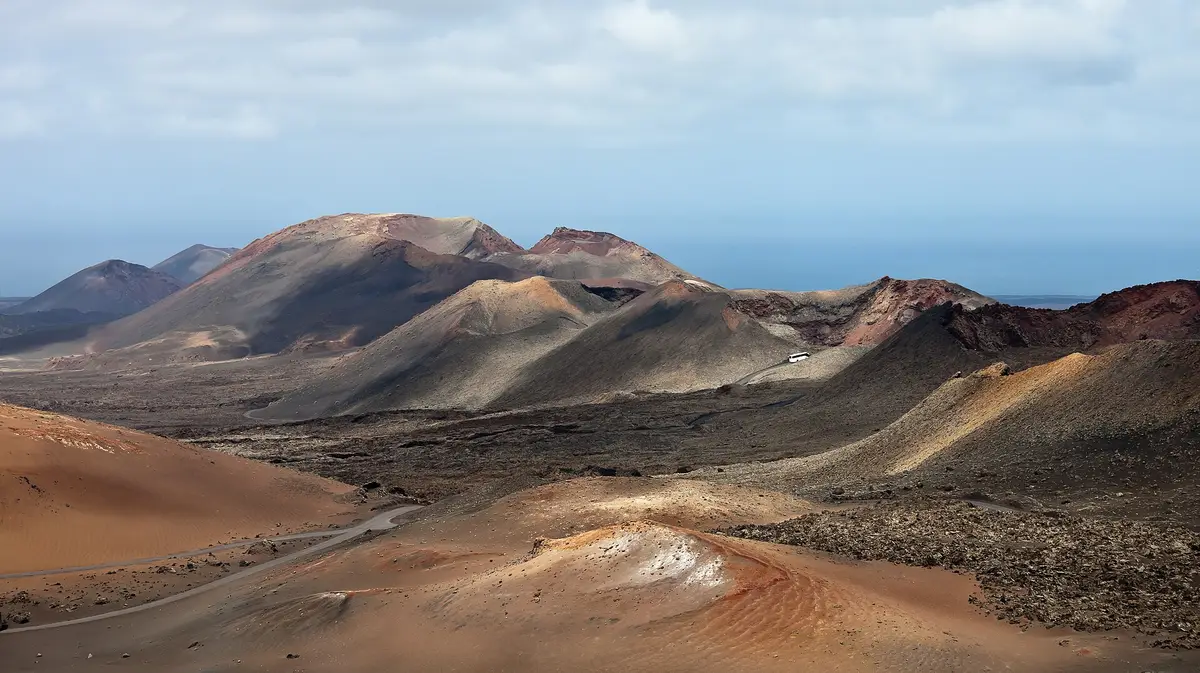
Across southwestern Lanzarote, Timanfaya National Park protects a landscape made entirely of volcanic soil. Most of it was transformed by eruptions between 1730 and 1736. Visitors come for the volcanic terrain and demonstrations of the heat beneath it, with access controlled through a coach route and authorised guided footpaths rather than unrestricted walking.
Timanfaya covers 51.07 square kilometres across parts of Yaiza and Tinajo. It is the only national park in Spain whose defining character is entirely geological: the ground throughout the protected area is volcanic. The greatest recorded eruptions took place between 1730 and 1736, creating much of the landscape now within the park. The last eruptions occurred in 1824, so this is a record of historical volcanic activity rather than a landscape formed only in the distant past.
Heat remains beneath the surface. In the park's core, temperatures at a depth of 13 metres range from 100 to 600 °C. During the water demonstration, water poured into a cavity is expelled almost immediately as steam. The effect comes from the hot ground, not an artificial heating system, and makes that continuing heat visible above the surface. César Manrique's El Diablo statue is the park's symbol, adding a recognisable human-made figure to a place otherwise defined by its volcanic geology.
Public access is strictly regulated to protect the park's delicate flora and fauna. From the public car park, visitors can take a coach tour along a road closed to ordinary public traffic. The coach is therefore part of the visit itself, carrying passengers through the volcanic landscape rather than simply dropping them at the start of an independent walk. This is not a park where arriving by car gives you freedom to drive its internal sightseeing road.
Walking is restricted too. The park has two footpaths accessible only with prior authorisation and a guide, so an independent hike is not an alternative to the coach route. These controls protect an area that forms part of the core of Lanzarote's biosphere reserve, designated in 1993.
Compared with Cueva de los Verdes, where visitors enter a lava tube, Timanfaya is principally an above-ground encounter with volcanic terrain. Its distinctive combination is the scale of the eruption-shaped landscape, the controlled coach journey and the demonstration of heat still held below the ground.
Timanfaya differs from Lanzarote's northern lava-cave attractions in both its formation and the way visitors experience it. Here, the main subject is the broad area transformed by historical eruptions, spread across parts of Yaiza and Tinajo. The protected ground is entirely volcanic, and the coach route gives access to terrain that cannot be explored freely by private car. The steam demonstration then brings attention beneath that surface, where substantial heat remains.
Cueva de los Verdes takes visitors inside a lava tube formed when the surface of a lava stream cooled and the molten material beneath drained away. Its illuminated cave walls and underground concert hall make for a visit within the volcanic structure rather than across the landscape above it. Jameos del Agua uses openings in that same northern tube for César Manrique's cultural centre, incorporating a salt lake, gardens and an auditorium. These are complementary visits rather than substitutes: Timanfaya centres on historical eruptions and hot ground, while the caves reveal the spaces left inside an older lava flow.
The park's geological identity does not mean that its surface is expendable. Delicate flora and fauna are part of the reason public access is tightly controlled, with ordinary traffic excluded from the internal touring road and walking confined to authorised guided access. The arrangement keeps visitors within defined routes through a landscape whose appearance is dominated by volcanic soil.
Timanfaya also sits within the wider protection given to Lanzarote. The whole island became a biosphere reserve in 1993, and the national park is among its core areas. Its 51.07 square kilometres preserve a substantial part of the ground altered during the eruptions of 1730 to 1736, alongside evidence of the island's later volcanic history. The last eruptions were in 1824, but the underground temperatures show that heat persists.
For visitors, those protections have practical consequences: the public car park is the starting point for the coach tour, not permission to explore the park independently. Walking requires both prior authorisation and a guide.


No, walking access within the park is restricted. The two accessible footpaths require prior authorisation and a guide. The regular way to tour the volcanic landscape is by coach from the public car park, following a road otherwise closed to public traffic. An independent walk is not a substitute for that controlled visit.
Timanfaya retains substantial underground heat, although its last eruptions occurred in 1824. Temperatures in the core range from 100 to 600 °C at a depth of 13 metres. Visitors see the effect when water poured into a cavity is rapidly expelled as steam. Most of the park's landscape dates from the eruptions of 1730 to 1736.
You cannot drive the park's internal sightseeing road in an ordinary private vehicle. There is a public car park from which visitors take a coach tour through the volcanic landscape. The touring road is otherwise closed to the public, so reaching the car park does not give you permission to continue independently through the protected terrain.
Timanfaya is an above-ground volcanic landscape visited by a controlled coach route, while Cueva de los Verdes takes visitors inside a lava tube. Timanfaya also has a demonstration of underground heat turning water into steam. Cueva de los Verdes has illuminated cave walls and a concert hall within the cave system.
Keep going
Human figures, a refugee boat and marine growth turn the seabed into an underwater sculpture gallery
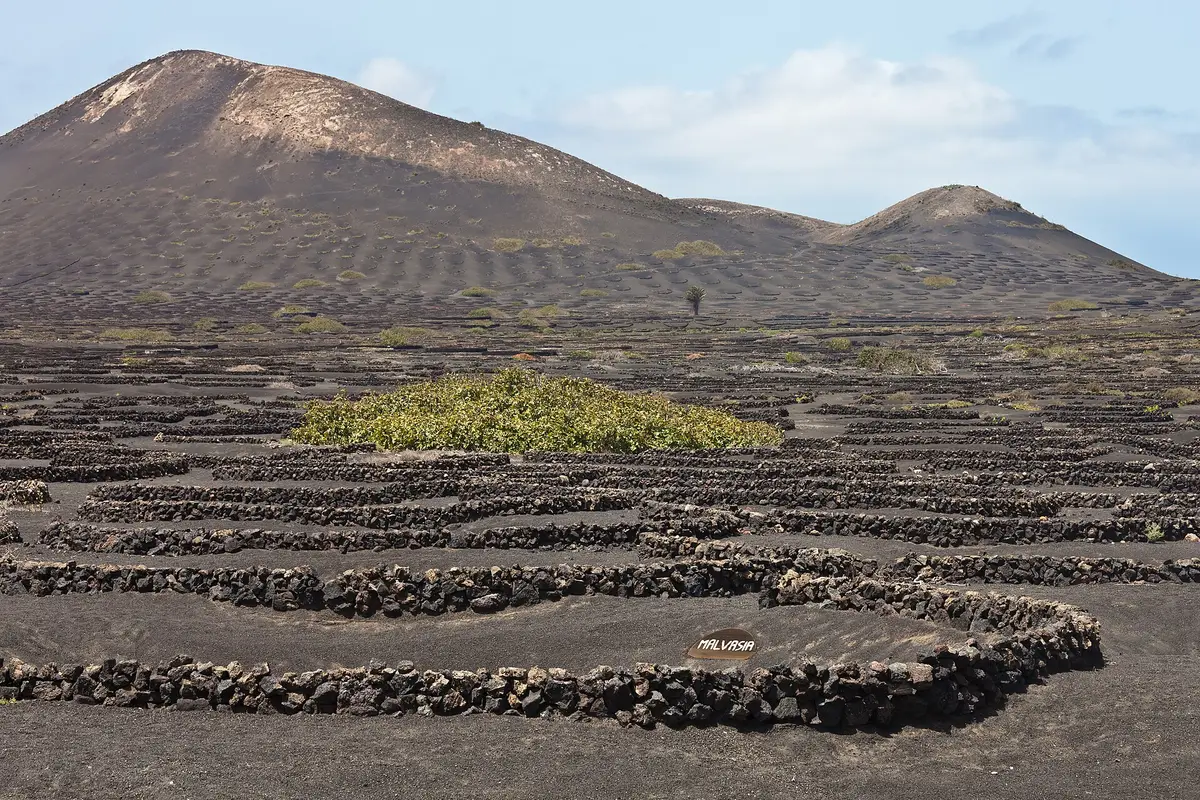
Vines grow in volcanic gravel, sheltered by conical hollows and low dry-stone walls
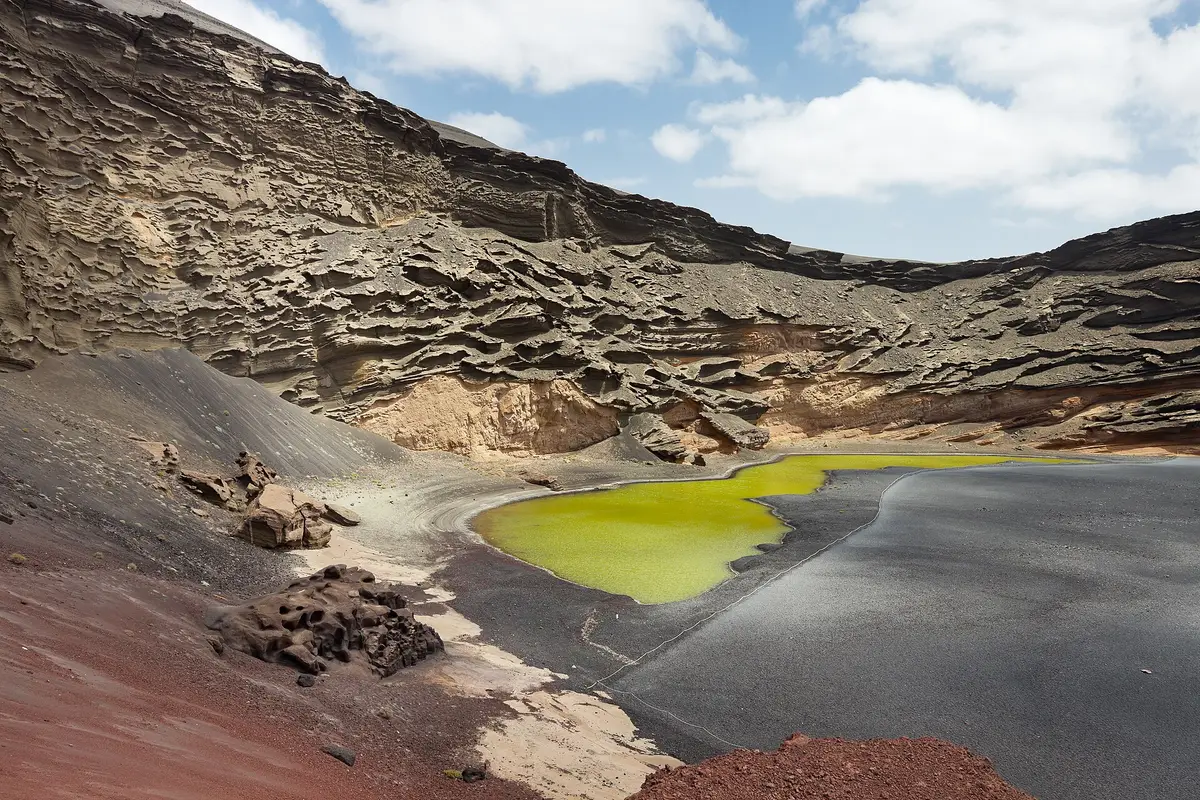
A green coastal lagoon between a volcanic crater and a black shore, seen from a footpath viewpoint