Manrique
Jameos del Agua
A subterranean salt lake and lava openings form the setting for César Manrique's cultural centre
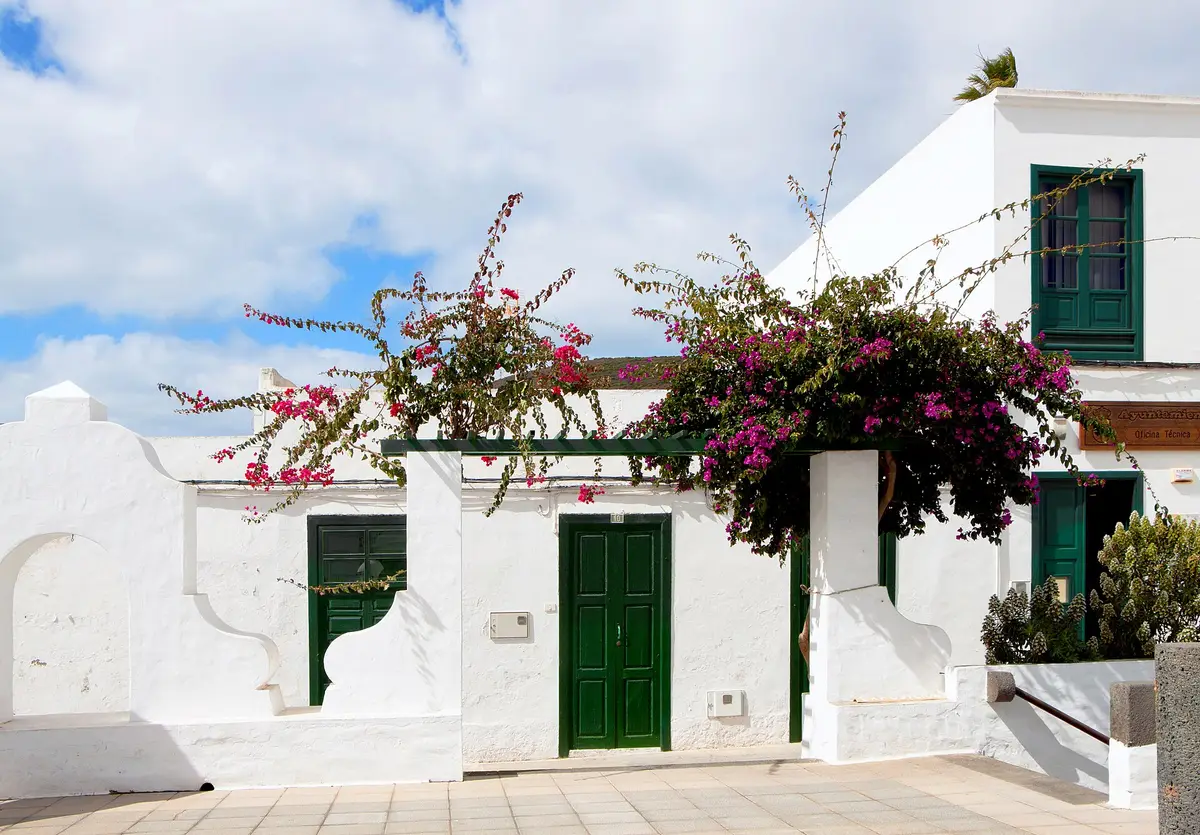
Palm trees and cultivated land give Haría a different setting from Lanzarote’s beach resorts. This inland village is the seat of the municipality covering the island’s north, with César Manrique’s home and studio as its principal cultural stop. Beyond the village, roads lead towards cliff viewpoints, lava tunnels and the coast.
Haría’s palm trees are its most immediate feature, but the surrounding countryside changes markedly with the season. Spring brings green, fertile fields; by late summer, those fields have turned dry and yellow. The village sits inland rather than on a resort beachfront, and the wider northern area lacks the chain hotels associated with the beach resorts. Visitors nevertheless pass through from the coast and Arrecife, particularly in season.
The main cultural attraction in the village is Casa Museo de César Manrique, also called Palm Grove House. This was Manrique’s home and studio, decorated in his own style. A visit centres on the domestic building and his working space, rather than the volcanic passages or cliff platforms found at his better-known northern attractions. It gives a Haría stop a substantial indoor component alongside the surrounding landscape. The house is distinct from Fundación César Manrique, so the names should not be treated as interchangeable when planning a visit.
The western part of Haría municipality is mountainous, with land rising steeply just inland from much of the coast. Viewpoints occupy this high ground, while the southeast is lower, more agricultural and edged by small coastal resorts. That contrast is visible on a drive through the north: inland slopes and cultivated ground give way to the coast around Arrieta and Punta Mujeres.
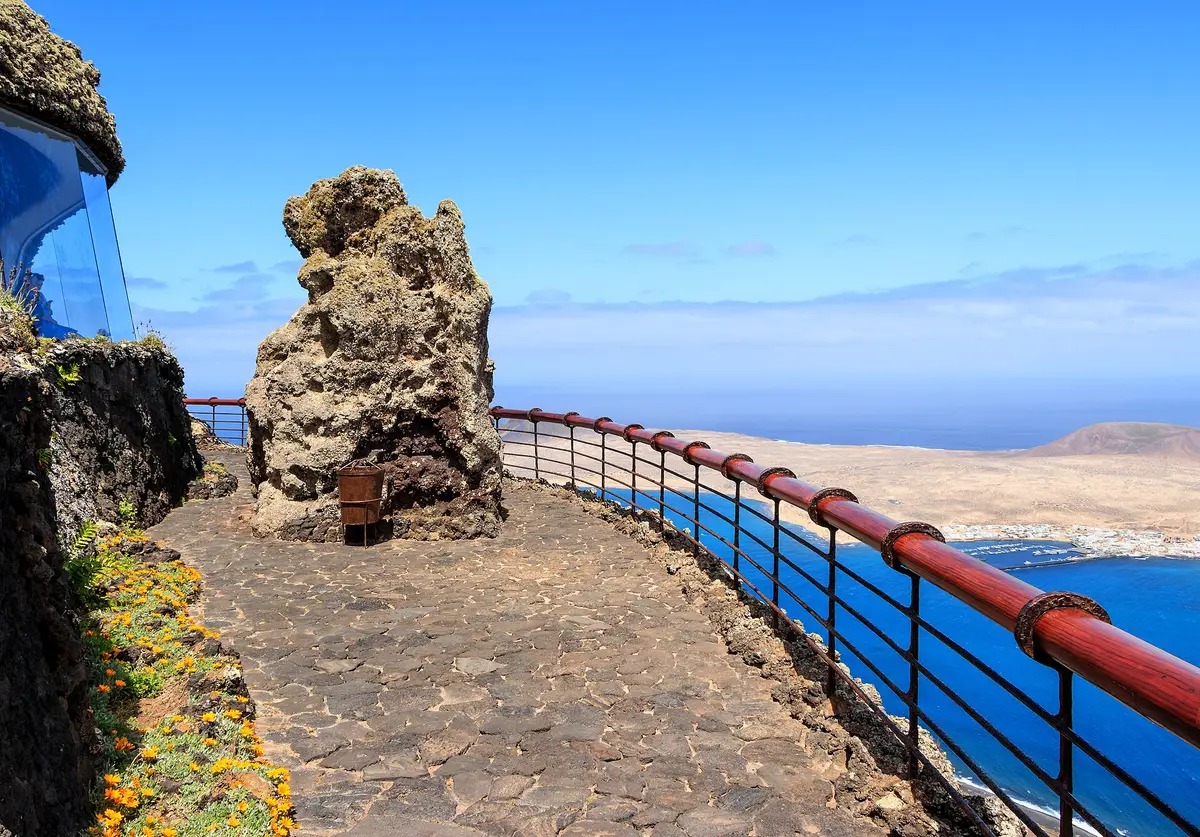
Mirador Rincon de Haría is reached up a lane from the village and looks out over the cliffs. It is a landscape stop rather than the built visitor attraction found at Mirador del Río. There, César Manrique carved a lookout into the scarp, incorporating a café and viewing platform into the rock. The view takes in La Graciosa across the water.
Mirador del Río lies beyond the village, so it belongs in a wider northern itinerary rather than a walk around Haría itself. Cycling this terrain involves steep gradients and a persistent Atlantic breeze.
The largely uninhabited northeast of the municipality was buried by an eruption of Montaña Corona. The eruption also created extensive hollow lava tunnels, parts of which now form Cueva de los Verdes and Jameos del Agua. These are separate attractions away from Haría village, with quite different experiences inside the same volcanic landscape.
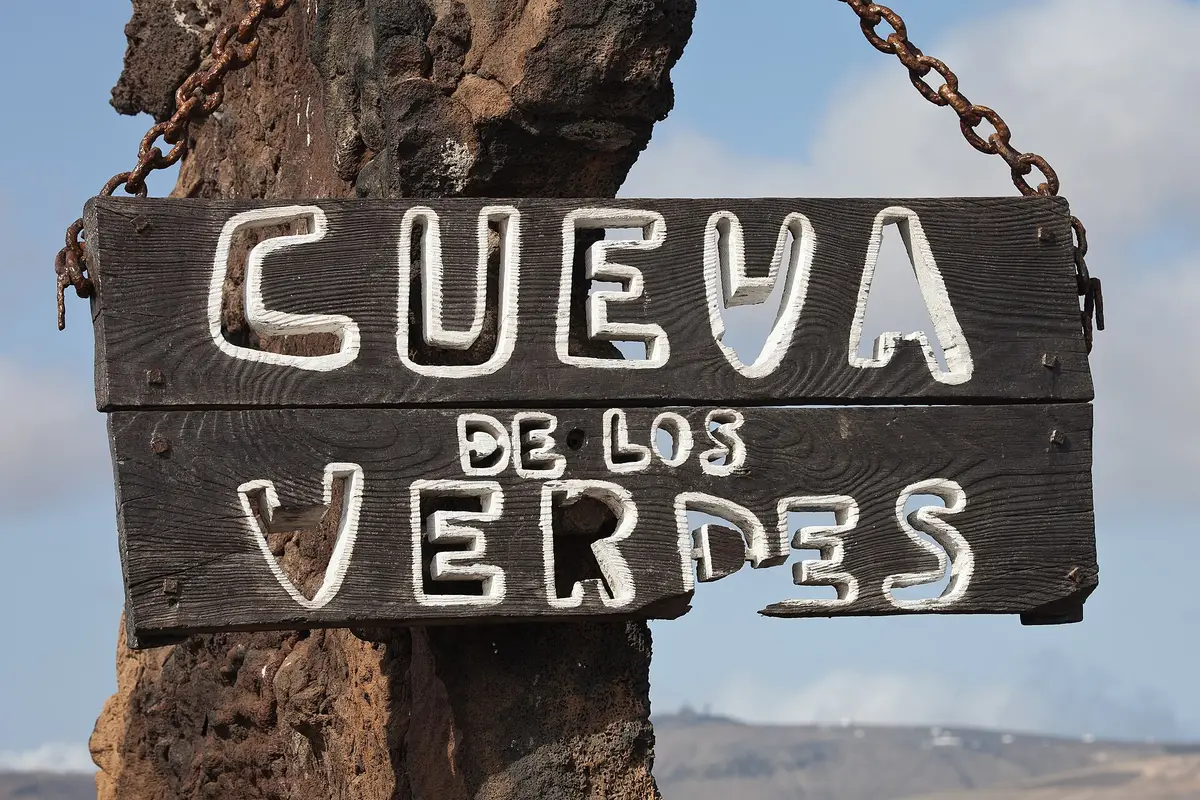
At Cueva de los Verdes, a guided tour follows a lit section of interconnected tunnels. The visit takes 45 minutes and involves rough surfaces, narrow passages and places where you need to duck your head. This is not a level stroll through an exhibition building; moving through the cave requires reasonable agility.
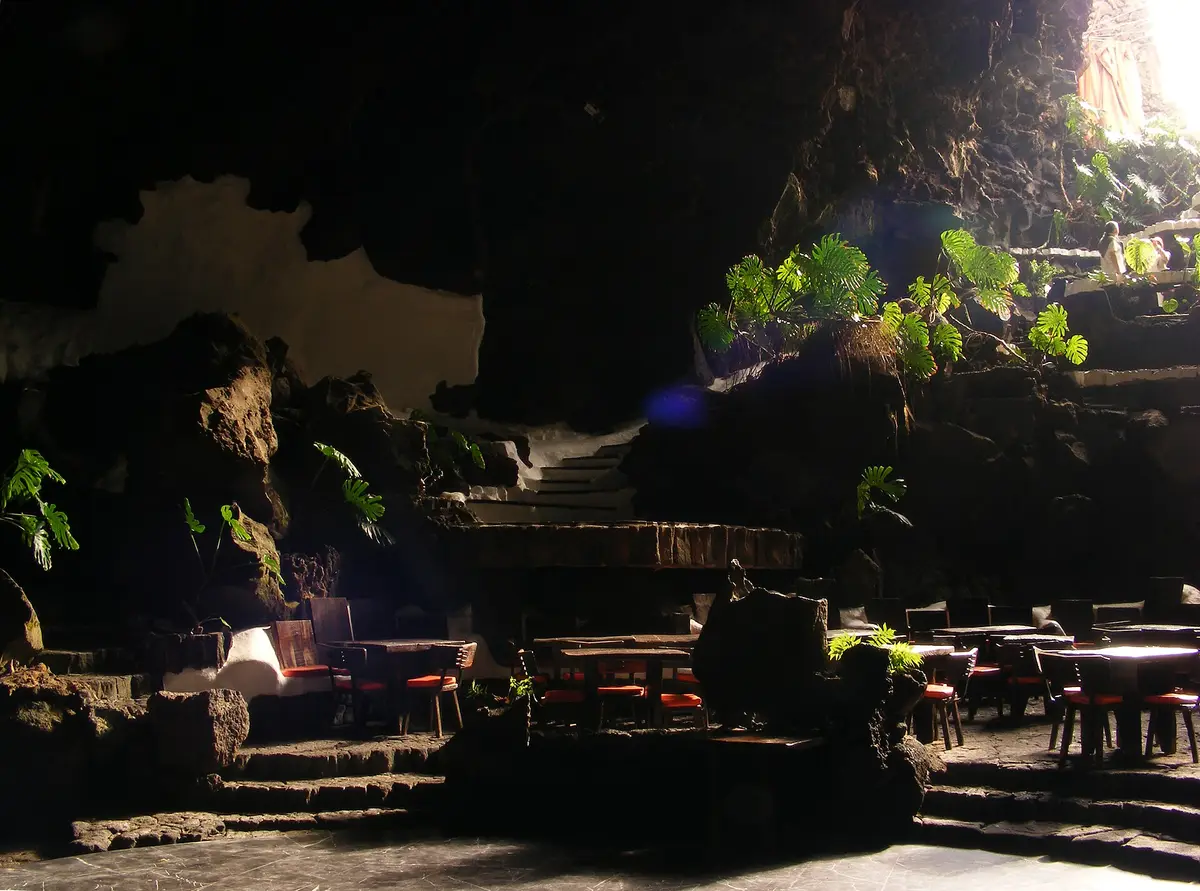
Jameos del Agua occupies a partly flooded lava tunnel entered through an opening left by a roof collapse. Its developed spaces include a bar, restaurant, swimming pool and concert hall, while blind albino crabs are an unusual feature of the water. Compared with the cave tour, the emphasis is on the relationship between the volcanic cavity and the built spaces within it.
By car from Arrecife, the LZ-1 runs north towards Órzola, with an inland branch at Arrieta for Haría. A car is the more practical option for combining the village with the scattered viewpoints and lava attractions: they are not all stops on a village walking circuit. The mountainous west also makes journeys by bicycle more demanding than the map alone might suggest.
Bus 7 links Arrecife with Haría via Teguise, Mala, Arrieta and Punta Mujeres, taking about an hour. Bus 26 also serves Haría before continuing farther north. Current timetables matter if you intend to return by bus or fit in another attraction, because services are too infrequent for flexible sightseeing across the municipality.
Bus 9 follows the coast from Punta Mujeres past Jameos del Agua to Órzola rather than turning inland to Haría. It is useful to distinguish that coastal service from the village routes. For a bus-based outing, concentrating on Haría and Manrique’s house avoids repeated transfers between dispersed sights.

Haría is worth visiting for César Manrique’s home and studio and its palm-filled inland setting. It offers a different outing from the coastal resorts, with cultivated countryside that is green in spring and dry by late summer. The village also fits into a driving itinerary linking northern viewpoints and lava attractions.
Yes, buses 7 and 26 connect Arrecife with Haría. The route passes through Teguise, Mala, Arrieta and Punta Mujeres, with the journey taking about an hour. Check the current timetable before planning your return. Buses work better for a focused village visit than for linking the north’s scattered caves and viewpoints.
They are in Haría municipality, but not in the village itself. Both occupy parts of the northern lava tunnel system towards the east coast. Cueva de los Verdes involves a guided walk through rough, sometimes narrow passages; Jameos del Agua combines a partly flooded volcanic cavity with built spaces including a restaurant and concert hall.
Casa Museo de César Manrique, also known as Palm Grove House, is the house in Haría. It contains his former home and studio, decorated in his style. This is a different attraction from Fundación César Manrique, so check which property you intend to visit when arranging transport or admission.
Keep going
A subterranean salt lake and lava openings form the setting for César Manrique's cultural centre
Enter a drained lava tube with illuminated cave walls and a concert hall near its entrance
A stone-covered viewpoint with vaulted rooms and broad windows facing La Graciosa