Manrique
Jameos del Agua
A subterranean salt lake and lava openings form the setting for César Manrique's cultural centre
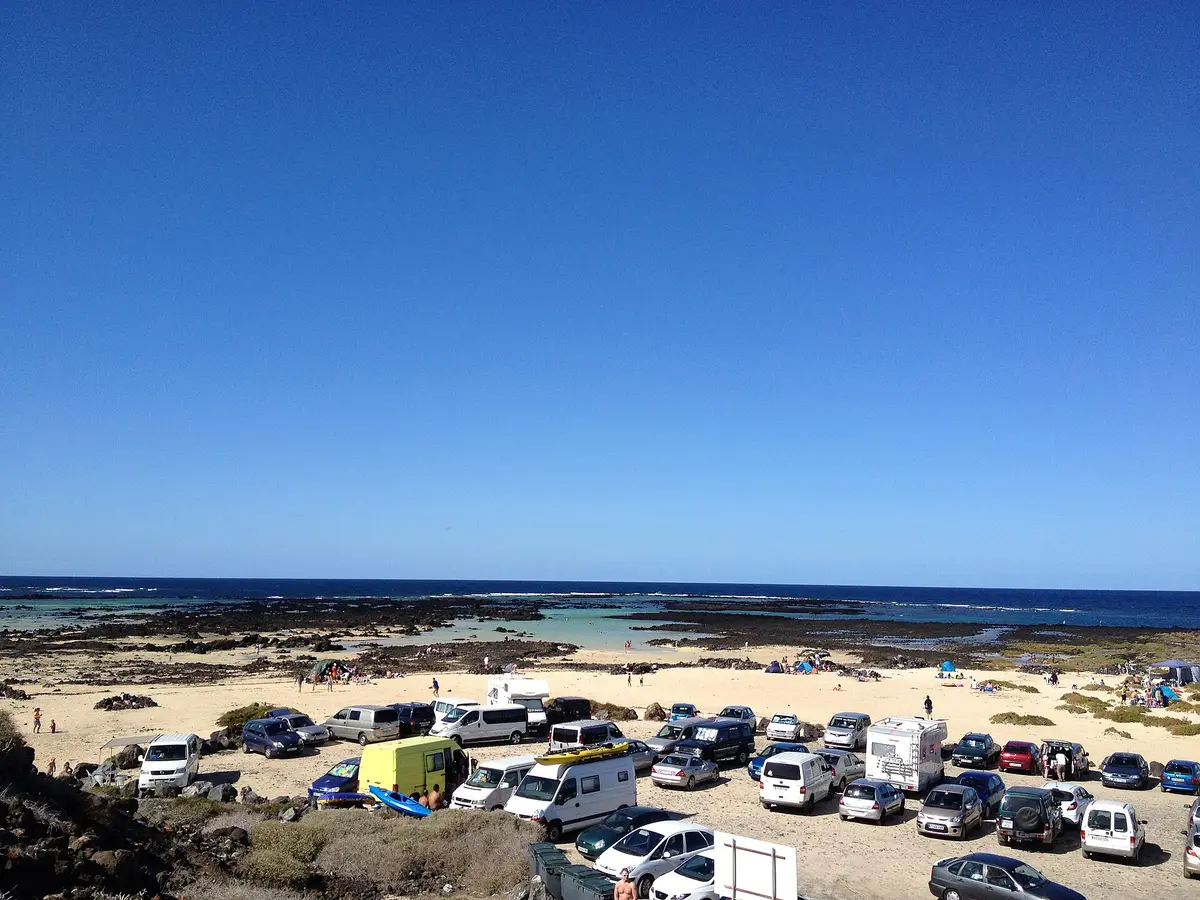
Pale sand lies between fingers of dark volcanic rock at Caletón Blanco, a beach near Órzola in northern Lanzarote, within the municipality of Haría. People come for the contrast of sand and lava, and for the shallow water held between the rocks. The tide shapes the visit as much as the weather does.
Caletón Blanco is not an uninterrupted sweep of sand. Dark lava breaks up the shore, enclosing patches of pale sand and dividing the water into pools and channels. Looking along the beach, the contrast is quite stark: rough, irregular rock beside sand that looks almost white, with the sandy bottom visible through shallow water.
The volcanic shoreline gives the beach its shape. Rock interrupts the route from dry sand to open water, so entering the sea involves finding a sandy gap rather than simply walking straight out. Some patches suit sitting or paddling better than swimming; the enclosed water should not be mistaken for a conventional swimming pool.
As the tide changes, so do the depth and extent of the pools. Lower water exposes more of the rocky framework, while rising water covers sections of it and alters the available sandy edges. That changing outline is central to the beach's character: the place where you spread a towel and the route you take into the water depend on the conditions when you arrive.
A visit here centres on the sand and the spaces between the rocks. There is scope for paddling, sitting beside a pool and looking closely at the lava, rather than treating the shore as a straightforward route to deeper water. The rock is uneven underfoot, and footwear suitable for wet, rough surfaces is useful if you leave the sand. Walking slowly matters more than covering much ground.
Wind can make a difference even when the pools look calm. A sheltered patch beside rock may feel more comfortable than exposed sand, but the beach remains an outdoor coastal setting without dependable shade. Drinking water, sun protection and a secure bag for loose belongings are sensible things to bring.
For families, shallow water is the attraction, not a guarantee of safe bathing. Children need close supervision around the pools, particularly where sand gives way to rock or a channel. Conditions beyond the enclosed shallows can differ from those at the water's edge. If waves are washing across the rocks, staying on dry sand avoids turning a paddle into a difficult entry or exit.
Órzola provides the geographical context for Caletón Blanco. The village belongs to Haría, the municipality covering this part of northern Lanzarote, and its pier is the departure point for access to La Graciosa. That gives this stretch of coast a role beyond beach visits: people also come through the area to make the island crossing.
Caletón Blanco and the pier serve different purposes. The beach is a place to spend time at the water's edge, with the tide determining how much sand and shallow water are available. Órzola is the place associated with the onward journey to La Graciosa. A beach stop can fit alongside time in the village, but it should remain separate from any fixed departure arrangements.
For a day focused on the shore, there is little reason to turn the beach into a hurried stop. Its interest is close at hand: the edge of a lava outcrop, a clear patch of water over sand, and the changing boundary between them as the sea moves in or out.
The reason to choose Caletón Blanco is the broken volcanic shoreline rather than a broad, uniform bathing area. Sand, exposed lava and enclosed shallows share the same space, so a beach session here can involve more sitting and paddling than continuous swimming. The rock also means that the most appealing patch of water is not necessarily the easiest to reach barefoot.
That distinction matters when choosing between the beaches in this guide. Playas de Papagayo, Playa de Famara, Playa Dorada, Playa Grande and Playa de las Cucharas are other options, but Caletón Blanco's particular draw is the close arrangement of pale sand, black rock and tidal water. It makes sense for travellers who want to spend time beside that landscape rather than assume every part of the shoreline offers the same entry into the sea.
A flexible plan works better than arriving with a fixed swimming route in mind. The visible pools, the amount of exposed rock and the state of the water give the clearest indication of what a visit can involve that day.


Caletón Blanco is near Órzola in northern Lanzarote, within the municipality of Haría. Órzola is also the village whose pier provides access to La Graciosa. The beach sits on a volcanic shoreline, where pale sand fills spaces between dark rock and the tide creates changing areas of shallow water.
Its shallow tidal pools can suit supervised paddling, but they do not guarantee safe swimming. Depth changes with the tide, and uneven rock interrupts the sandy bottom and access to the water. Adults should assess conditions on arrival, stay close to children and avoid assuming that calm-looking shallows reflect conditions farther out.
Bring drinking water, sun protection and footwear that can cope with rough, wet rock. A towel or mat makes sitting on the sand more comfortable, while a bag that closes securely helps keep loose belongings together in the wind. Pack for an exposed coastal visit rather than relying on shade at the beach.
Yes, the tide changes the depth and extent of the pools and how much rock is exposed. Lower water reveals more of the lava framework, while rising water covers parts of it and shifts the sandy edges. Check the water and your route back before settling beside a pool or entering the sea.
Keep going
A subterranean salt lake and lava openings form the setting for César Manrique's cultural centre
Enter a drained lava tube with illuminated cave walls and a concert hall near its entrance
A stone-covered viewpoint with vaulted rooms and broad windows facing La Graciosa