Manrique
Jameos del Agua
A subterranean salt lake and lava openings form the setting for César Manrique's cultural centre
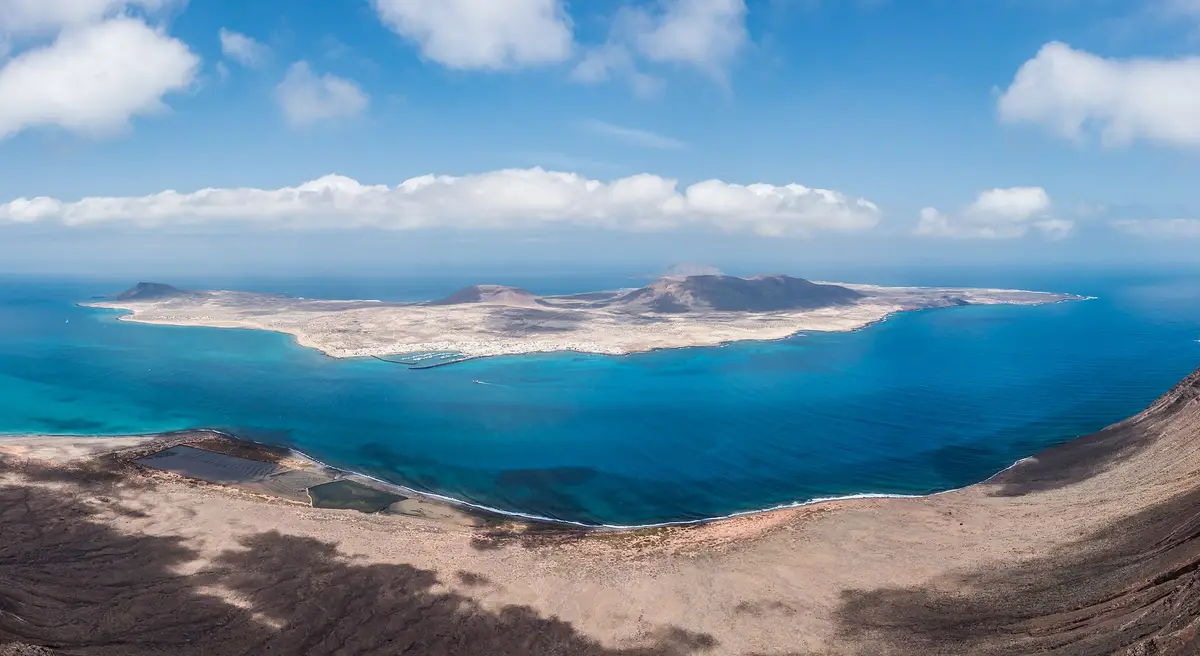
Sandy streets replace tarmac on La Graciosa, a volcanic island two kilometres north of Lanzarote. Visitors arrive by ferry for beaches, dry volcanic landscapes and village life shaped by fishing and tourism. Part of the Chinijo Archipelago, it was officially declared the eighth Canary Island in 2018, while remaining administratively dependent on Lanzarote.
The ferry from Órzola takes 25 minutes and arrives at the harbour in Caleta de Sebo, on the southeastern side of La Graciosa. The crossing passes over the Strait of El Río, separating the island from Lanzarote. Beyond the harbour, streets and roads are unpaved sand rather than tarmac. Motor vehicles are strictly restricted to a small number licensed for special purposes, so this is not an island to explore with your usual hire car.
Caleta de Sebo is a working settlement, not simply a landing point for beach trips. La Graciosa has about 700 residents, with fishing and tourism supporting the economy. Everyday facilities include supermarkets, a pharmacy, a medical centre, a post office and a bank, alongside bar-restaurants and a square. These services make the village the practical base for a visit. The island's only other settlement is Casas de Pedro Barba, a place of summer residences rather than another equivalent service centre. Administration sits with Teguise on Lanzarote.
La Graciosa measures 8 km long and 4 km wide, with an area of 29 km². Like the rest of the Canary Islands, it formed through volcanic activity associated with the Canary hotspot. Its landscape is extremely arid: bushes and dry soil cover the ground, isolated hills interrupt the terrain, and sand lines stretches of the volcanic coast. The island belongs to the Chinijo Archipelago Natural Park.
Agujas Grandes is the highest hill at 266 m, followed by Agujas Chicas at 228 m. In the south, Montaña Amarilla reaches 175 m and has a climbing path on its northern side. That provides a specific walking objective for visitors who want more than time beside the water. Playa de la Cocina lies in the southwestern part of the island and is a well-known beach.
A visit can centre on the coast or include a hill walk, but the dry, bush-covered terrain offers little shelter from the sun. Drinking water and sun protection belong in your bag before leaving the village.
La Graciosa has no natural water sources. Desalinated water has been piped across from Lanzarote since 2001, and a break in that pipe can put the supply at risk. This infrastructure supports an island with a hot desert climate and annual rainfall of only 76.7 millimetres. For visitors, the practical consequence is simple: walks and beach outings need a carried supply of drinking water, rather than any expectation of finding a natural source along the way.
Supermarkets and bar-restaurants provide options for provisions and meals, but everyday shopping costs more than on the other islands because goods have to be transported here. Buying supplies is part of planning a day beyond the settlement, particularly when walking on sandy routes rather than travelling by car.
Overnight plans also need care. The former campsite at Playa del Salado, on the western edge of Caleta de Sebo, closed permanently during the pandemic. It is not an available camping option; an overnight stay requires confirmed arrangements elsewhere.
The main difference between visiting La Graciosa and continuing a driving tour of Lanzarote is the transport itself. Arrival involves a sea crossing, and the roads beyond the harbour are sand. Restricted motor traffic changes what a day can include: a beach outing and a walk need to fit the conditions underfoot and the return ferry arrangements, rather than a sequence of stops by hire car.
The island is inhabited but largely undeveloped outside its settlements. Beyond Caleta de Sebo and Casas de Pedro Barba, the land is owned by the Government of Spain and administered by the National Parks Autonomous Agency. The protected landscape is therefore also the setting for everyday island life, with fishing, tourism and essential services concentrated around the settled areas.
Recognition as the eighth Canary Island in 2018 did not bring a substantial administrative change. La Graciosa remains dependent on Lanzarote, including for its piped water supply. The sandy roads, sparse vegetation and separate ferry connection are the differences a visitor actually encounters.


A ferry from Órzola reaches the harbour in Caleta de Sebo in 25 minutes. The crossing takes you over the Strait of El Río to La Graciosa. From the harbour, the village streets and island roads are unpaved sand. Check current sailing arrangements before planning your outward and return journeys.
La Graciosa is not somewhere to take an ordinary hire car for sightseeing. Motor vehicles are strictly limited to a small number licensed for special purposes, and the roads are unpaved sand. Plan your visit around the ferry arrival and realistic walks, rather than assuming you can drive between beaches and volcanic hills.
The former campsite at Playa del Salado is permanently closed, so it cannot be used for a camping stay. It stood at the western edge of Caleta de Sebo and closed during the pandemic. Do not base an overnight trip on that facility; confirm an available and permitted overnight arrangement before travelling.
Yes, La Graciosa has supermarkets and bar-restaurants, with Caleta de Sebo serving as the practical base for visitors. The island also has a pharmacy, medical centre, post office and bank. Everyday shopping is more expensive than on the other islands because of transport costs, so allow for that when planning provisions.
Keep going
A subterranean salt lake and lava openings form the setting for César Manrique's cultural centre
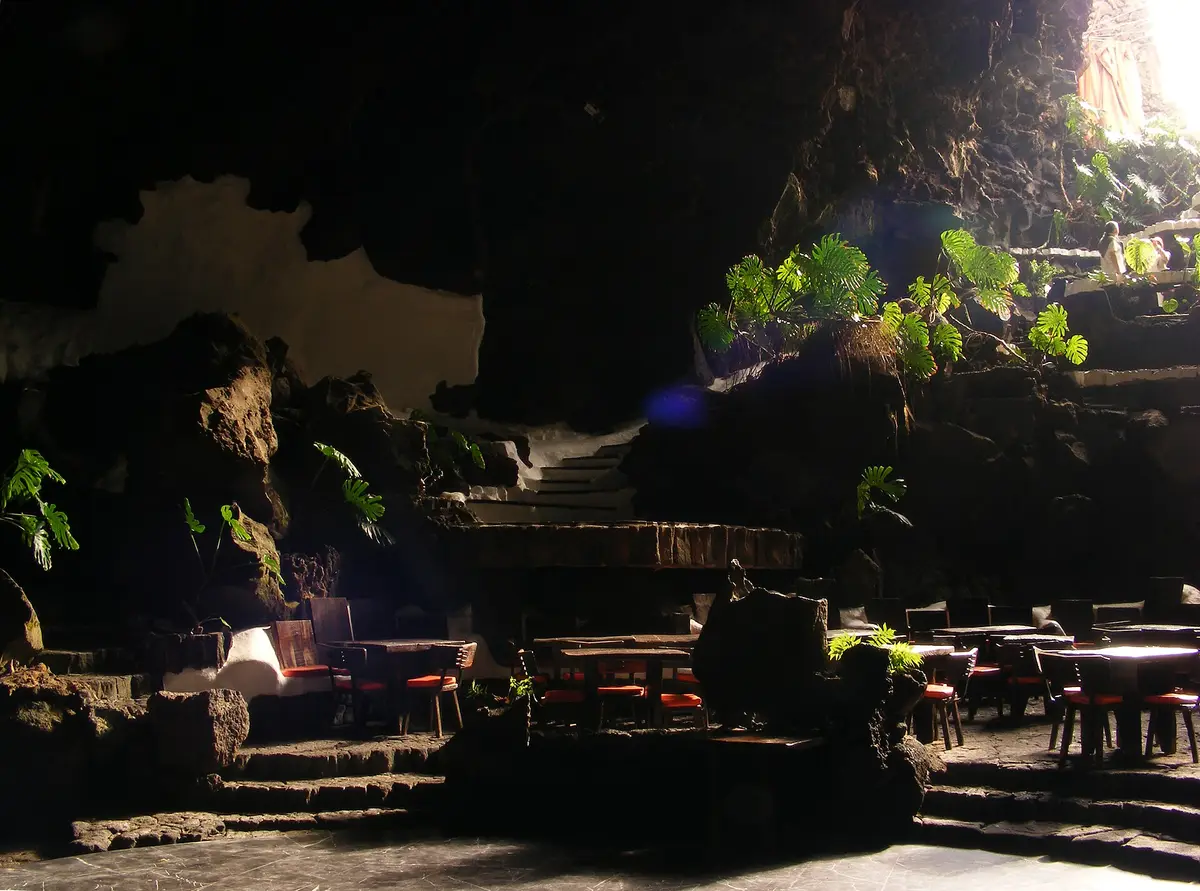
Enter a drained lava tube with illuminated cave walls and a concert hall near its entrance
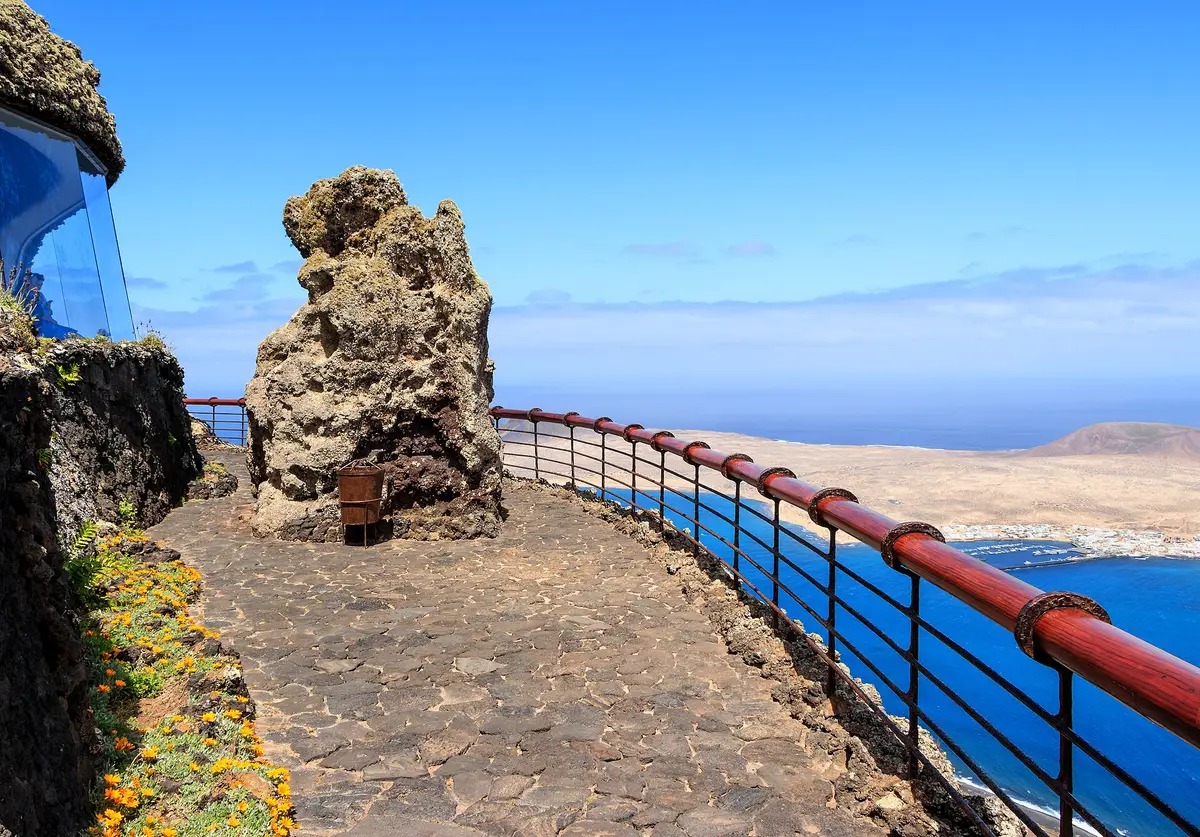
A stone-covered viewpoint with vaulted rooms and broad windows facing La Graciosa