Manrique
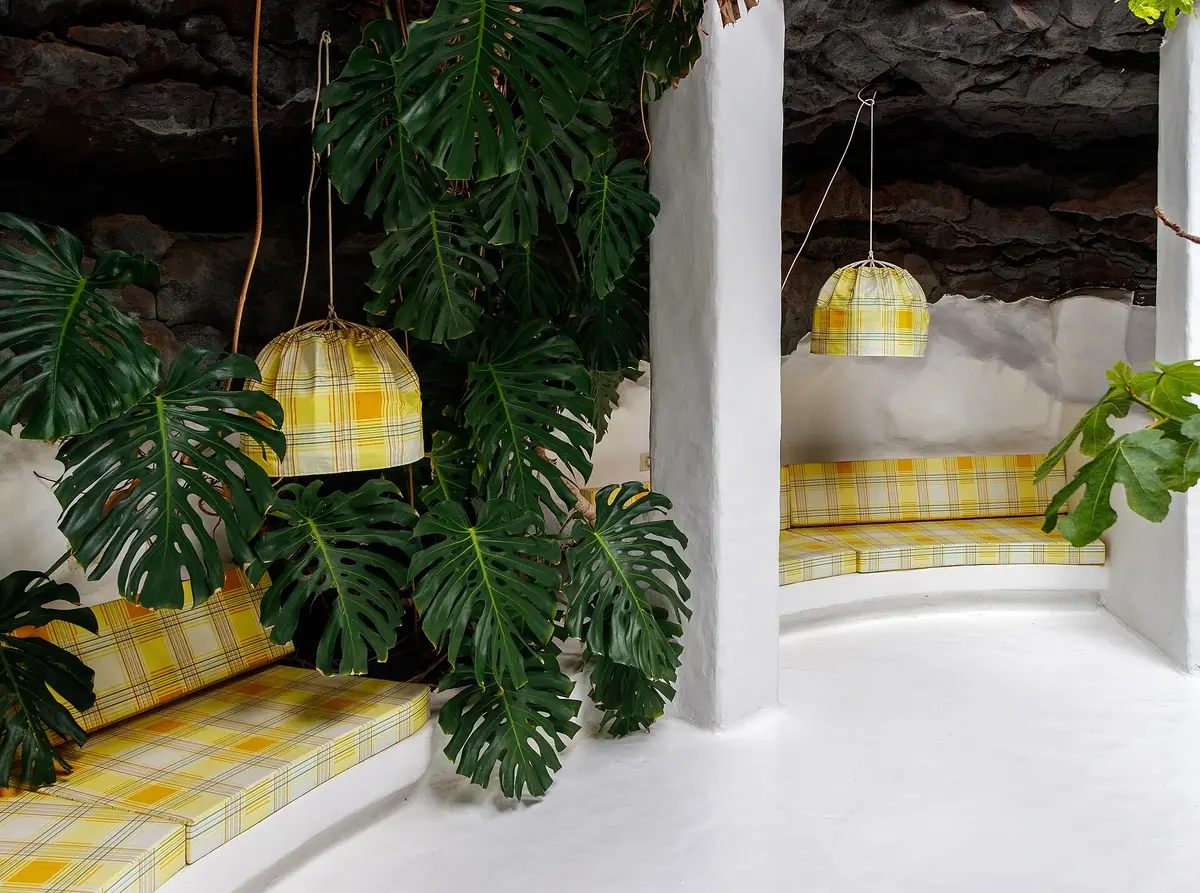
Fundación César Manrique
The foundation continuing César Manrique's conservation work on Lanzarote
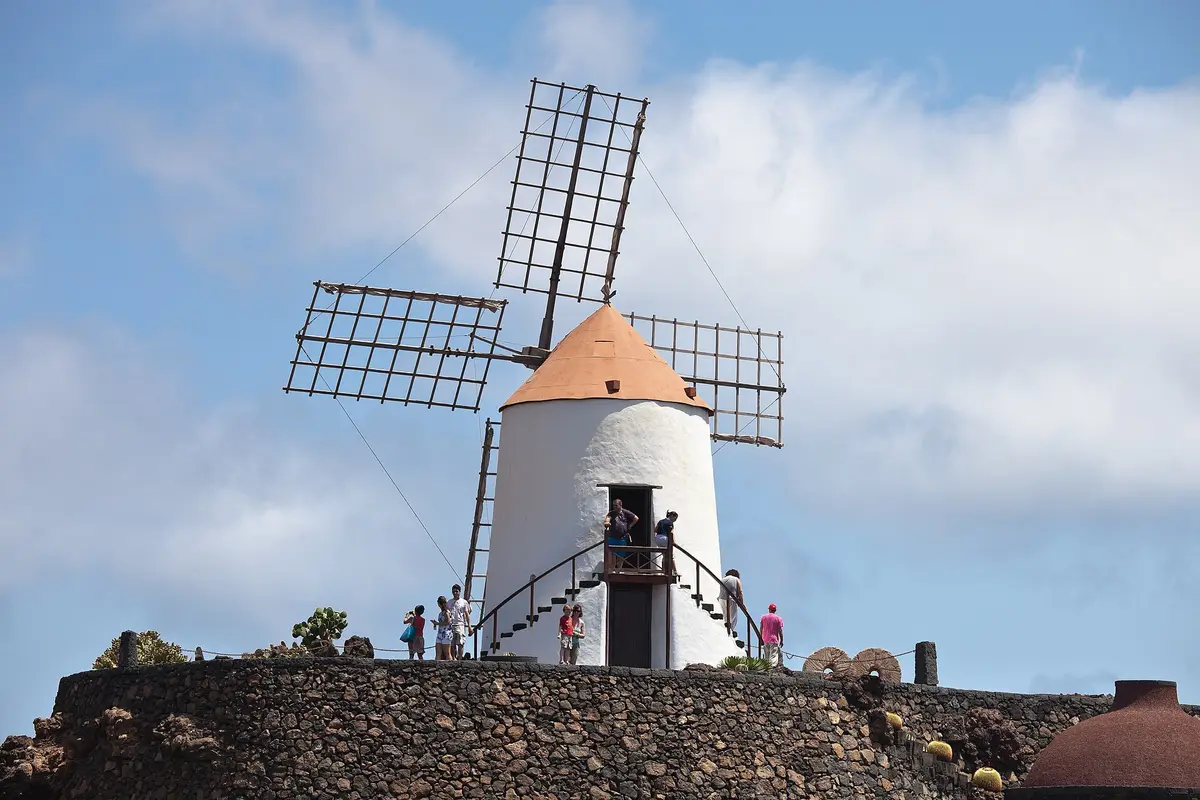
Jardín de Cactus fills a former quarry in Guatiza with terraced planting arranged like a large amphitheatre. Created in 1991 as César Manrique's last project, it brings together 4,500 cacti and succulents representing 450 species. The appeal lies in the planted terraces, the quarry setting and the restored windmill above them.
Planning a whole day from a base nearby? See things to do in Costa Teguise.
The garden occupies a quarry once worked for volcanic lapilli, the granular material also known locally as picón or rofe. Farmers spread it over cultivated ground to help retain moisture. Rather than conceal that excavated setting, Manrique used its amphitheatre-like form to organise the garden, with plants arranged across terraces. The result is a collection seen both close up and as a planted bowl. Botanist Estanislao González Ferrer was responsible for selecting and planting the specimens, giving the project a botanical foundation alongside its architectural design. There are now 4,500 examples of 450 species of cacti and succulents, drawn from desert and other arid regions. A visit centres on looking through that collection and seeing how individual plants relate to the terraced arrangement. Unlike Mirador del Río, which frames distant islands through broad windows, Jardín de Cactus keeps the main view within the site itself: quarry, planting and windmill make up the composition.
A restored windmill stands at the garden's highest point, above the planted terraces. It was once used in the production of gofio, so it connects the garden to food production as well as providing a recognisable feature above the quarry. The surrounding area has another agricultural connection: prickly pears are cultivated for cochineal. This insect is the source of carmine, a natural dye, and explains why cactus cultivation here has a purpose beyond ornamental planting. Together, the quarry, windmill and prickly pears give the garden a setting rooted in local working practices. The quarry supplied material for retaining moisture in cultivated land; the mill served food production; the surrounding crop supported dye-making. Manrique's 1991 project placed a botanical collection within that context rather than starting on an unrelated plot. For visitors, the windmill is the feature to look for above the amphitheatre, while the planted terraces below show the scale of the cactus and succulent collection.
Jardín de Cactus was created in 1991 and was César Manrique's last project. Its design combines an existing excavated space with a botanical collection, rather than treating the plants and the surrounding architecture as unrelated attractions. Manrique shaped the garden around the former quarry's amphitheatre form, while botanist Estanislao González Ferrer selected and planted the specimens. That division of work matters to what a visitor sees: the terraces organise the overall view, but the collection has a breadth that extends beyond its visual arrangement. The garden now contains 4,500 examples of 450 cactus and succulent species from desert and other arid areas. The restored windmill marks the highest point above the planting and helps make the layout legible as a whole. Looking across the quarry reveals the terraced composition; looking through the planting brings attention back to individual specimens. Both scales are central to the garden, which is neither simply a preserved quarry nor a collection placed on flat ground.
Jardín de Cactus suits a visit focused on planting and the reuse of a worked landscape. The main subjects stay close together: the former quarry, terraced collection and restored windmill form the garden's central arrangement. Mirador del Río offers a contrasting experience. There, a stone-covered building opens towards the Strait of El Río and La Graciosa, making the distant outlook central to the visit. At Jardín de Cactus, the interest is contained within the amphitheatre, so the individual specimens and their position on the terraces deserve attention alongside the overall shape. The site's agricultural background also distinguishes it. Volcanic lapilli was extracted here to help retain moisture on cultivated land, and prickly pears in the surrounding area are grown for cochineal dye production. Those uses give context to the transformation into a garden. It is a place to examine a planted collection within Manrique's design, rather than a viewpoint whose main subject lies beyond its boundaries.


Jardín de Cactus is in Guatiza on Lanzarote, occupying a former volcanic quarry. The quarry supplied lapilli used on cultivated land to help retain moisture. Today its amphitheatre shape holds terraces of cacti and succulents, with a restored windmill at the highest point. Prickly pears are grown in the surrounding area for cochineal production.
Yes, César Manrique created Jardín de Cactus in 1991 as his last project. Botanist Estanislao González Ferrer selected and planted the specimens. The design uses the former quarry as a large amphitheatre, arranging the collection on terraces beneath a restored windmill. Its existing excavated shape is central to the garden's layout.
The garden has 4,500 examples of 450 species of cacti and succulents. They are arranged on terraces within a former volcanic quarry, creating both a botanical collection and an amphitheatre-like overall view. Estanislao González Ferrer was responsible for selecting and planting the specimens as part of César Manrique's garden project.
The restored windmill at the garden's highest point was once used in the production of gofio. It stands above the terraced cactus and succulent collection, making it a clear feature of the overall layout. Alongside the former quarry and nearby prickly pear cultivation, it connects the garden with local agricultural practices.
Keep going
The foundation continuing César Manrique's conservation work on Lanzarote
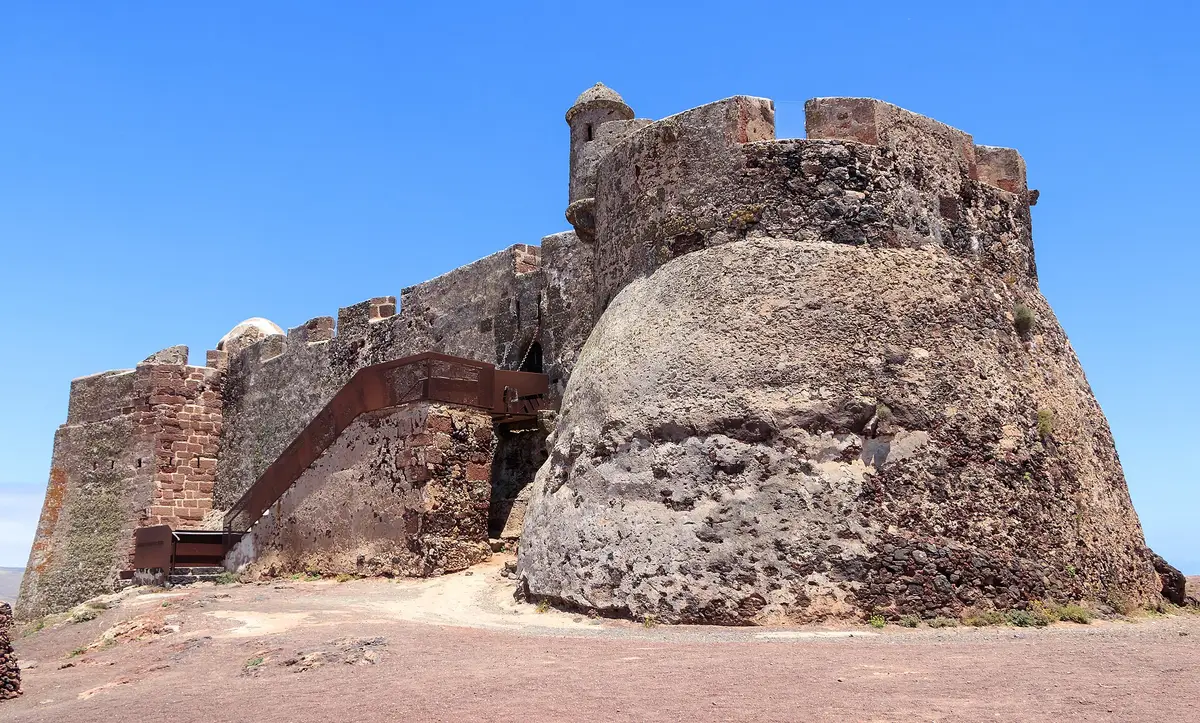
A fortress on Guanapay volcano’s crater edge, built to shelter Teguise’s inhabitants and now housing the Piracy Museum
Sharks, local marine life and touch tanks, alongside a display showing the effects of coastal pollution