Landscape
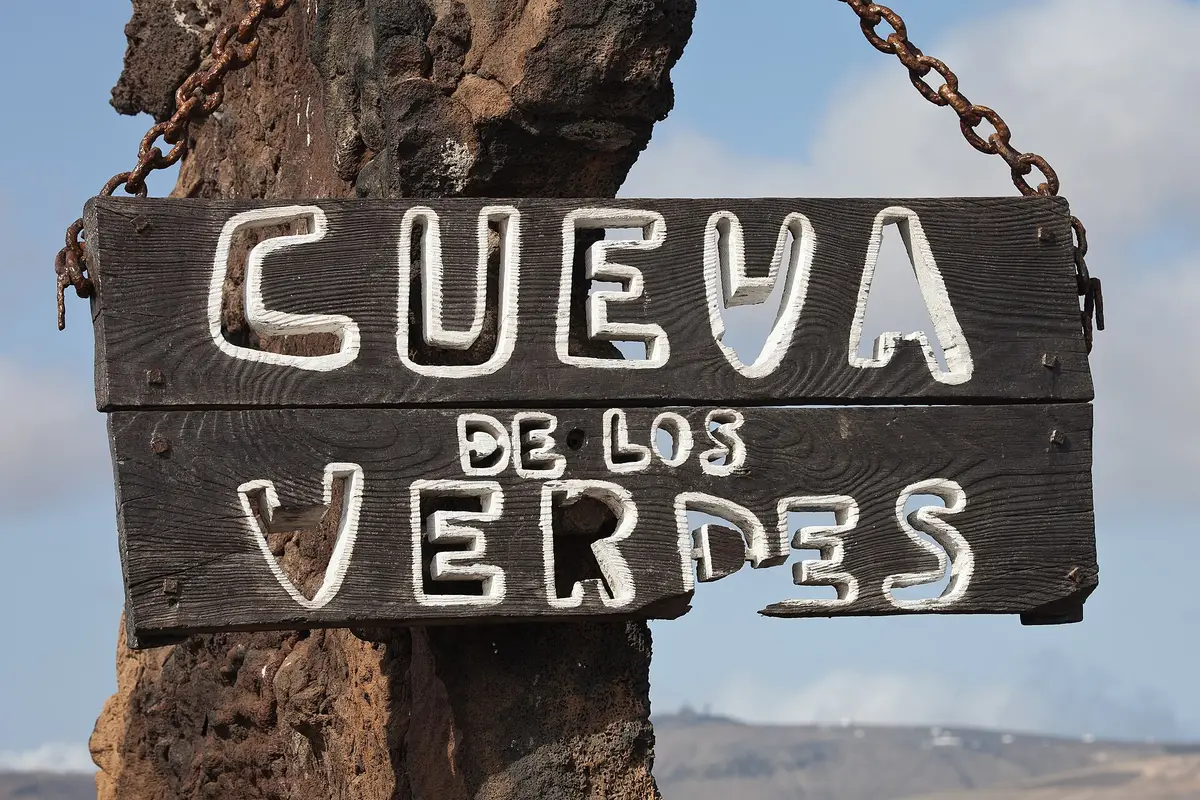
Cueva de los Verdes
Enter a drained lava tube with illuminated cave walls and a concert hall near its entrance
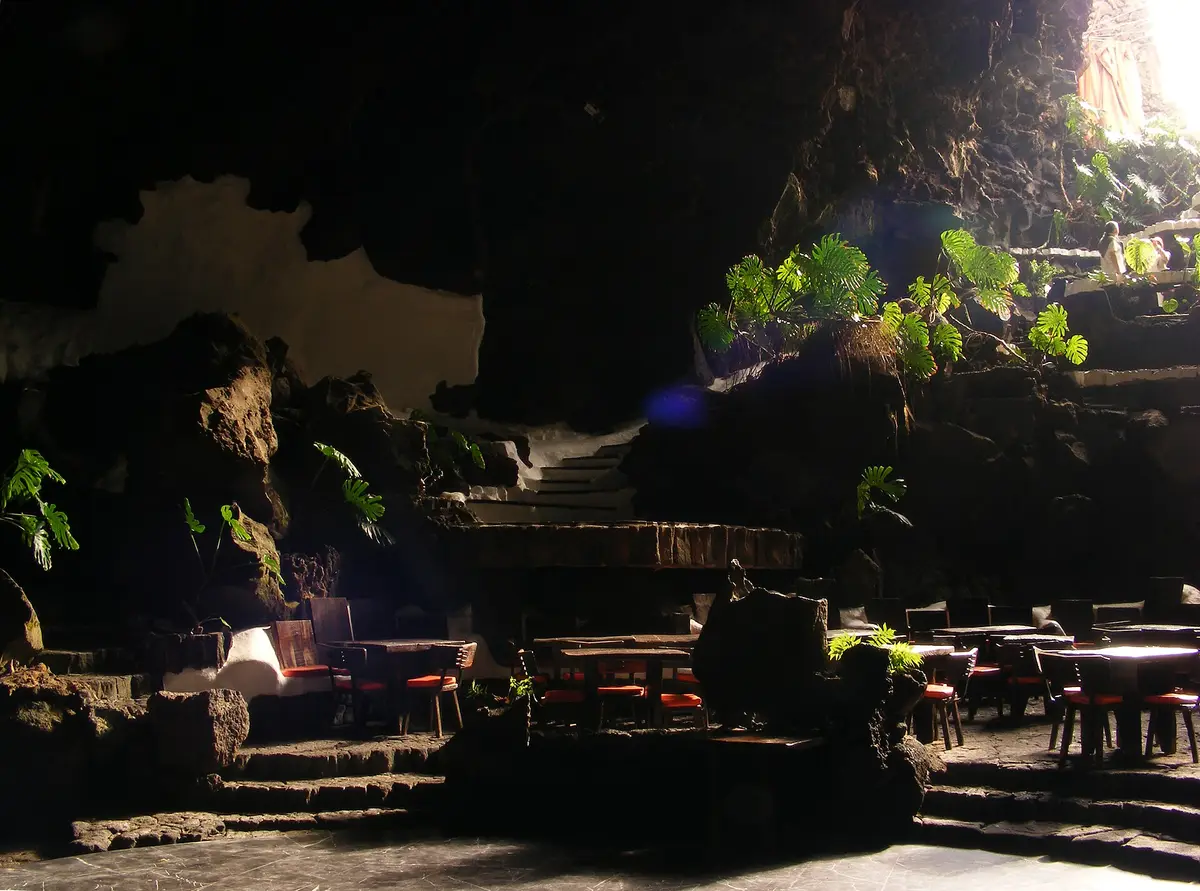
César Manrique turned a series of lava-cave openings in northern Lanzarote into Jameos del Agua, a centre for art, culture and tourism in the municipality of Haría. A visit brings together a subterranean salt lake, gardens, an emerald-green pool and an auditorium, with the volcanic structure remaining central to the design.
A jameo is an opening left when part of a lava tube's roof collapses. At Jameos del Agua, these openings belong to the same volcanic tube as Cueva de los Verdes, formed by an eruption of Monte Corona. Jameos del Agua occupies the section closest to the coast, where Manrique incorporated the existing cavities into a cultural centre rather than replacing their natural structure with a conventional building.
Work began with cleaning and restoring an abandoned site. The lava tube's irregular form led to repeated changes in the project, with the architecture adjusted to fit the available spaces. The first public areas opened in 1966; the general structure was completed in 1977, when the centre officially opened with its auditorium.
The resulting complex includes a restaurant, gardens, an emerald-green pool and the subterranean lake. It was Manrique's first art, culture and tourism centre. Unlike the illuminated cave passages at Cueva de los Verdes, the emphasis here is on volcanic openings adapted for gardens, dining and cultural use.
The subterranean salt lake is a habitat as well as a central feature of the visit. Its water, derived from the sea, supports an endemic species of blind squat lobster. These yellow-white crustaceans are barely a centimetre long, so the wildlife here is on a very different scale from the surrounding lava cavities. The lake and the emerald-green pool are separate features of the complex.
The squat lobsters are sensitive to changes in noise and light, and to oxide contamination, which can kill them. Throwing coins into the water is forbidden. The lake is therefore not a wishing pool: the pale animals living in it depend on the water remaining undisturbed and uncontaminated.
Beyond the lake, the centre combines its gardens and auditorium with a museum devoted to science and volcanology. The museum was added after the main structure opened, extending the site's role beyond Manrique's architectural intervention. Together, these elements make Jameos del Agua both a designed cultural space and an ecologically fragile part of a volcanic tube.
Jameos del Agua is more than a cave opened to visitors. Its restaurant, gardens, emerald-green pool, museum and auditorium occupy a setting shaped by collapsed sections of a lava tube. The contrast comes from placing these designed spaces within the existing volcanic cavities: planted areas and a pool sit alongside the subterranean salt lake and the rock structure that determined the layout.
Manrique's project changed repeatedly as the work encountered the tube's particular form. The available spaces influenced the design rather than being treated as obstacles to remove. The auditorium was included when the completed general structure officially opened in 1977, giving the complex a cultural function as well as a sightseeing role. Later additions included the museum, with science and volcanology becoming part of the centre's work.
A visit therefore has several distinct subjects: the lava openings themselves, the lake's small endemic crustaceans, Manrique's arrangement of the gardens and pool, and the spaces created for dining, exhibitions and performances. The natural structure connects them.
Jameos del Agua and Cueva de los Verdes occupy the same volcanic tube, but their developed spaces serve different purposes. Jameos del Agua is closest to the coast and brings together a sea-derived salt lake, gardens, a pool, a restaurant, a museum and an auditorium. César Manrique's intervention is a central part of the attraction: the lava openings became the framework for an art, culture and tourism centre.
At Cueva de los Verdes, the visitor attraction follows developed sections of the cave system, with coloured lighting on the walls and a concert hall near the entrance and exit. Its earlier use as a refuge from pirates and raiders adds a different human history to the volcanic setting.
For a visit centred on architecture and the arrangement of outdoor and subterranean spaces, Jameos del Agua is the closer fit. For cave passages and the structure left behind by a drained lava stream, Cueva de los Verdes is the more direct comparison. Their shared geology does not make the experiences interchangeable.
.jpg)

Jameos del Agua is a Manrique-designed cultural complex, while Cueva de los Verdes focuses on developed cave passages with illuminated walls. Both occupy the same volcanic tube. Jameos del Agua combines a salt lake, gardens, pool, restaurant, museum and auditorium; Cueva de los Verdes also has a concert hall and a history as a refuge from raids.
They are endemic blind squat lobsters living in the subterranean salt lake. Yellow-white and barely a centimetre long, they are sensitive to changes in light and noise as well as contamination. Coins must not be thrown into the water because oxide can harm or kill them. The lake is a fragile habitat, not a decorative wishing pool.
César Manrique created Jameos del Agua as an art, culture and tourism centre within existing lava-cave openings. The first public areas opened in 1966, and the completed general structure officially opened in 1977 with its auditorium. The project changed repeatedly to suit the volcanic tube's form, with further facilities added afterwards.
A jameo is a large opening formed when part of a lava tube's roof collapses. At Jameos del Agua, these openings provided the spaces for Manrique's cultural centre. The complex occupies the coastal section of the same tube as Cueva de los Verdes, with a subterranean salt lake among its principal natural features.
Keep going
Enter a drained lava tube with illuminated cave walls and a concert hall near its entrance
A stone-covered viewpoint with vaulted rooms and broad windows facing La Graciosa
A ferry ride from Órzola leads to sandy streets, volcanic hills and a coastline without paved roads