Manrique
Jameos del Agua
A subterranean salt lake and lava openings form the setting for César Manrique's cultural centre
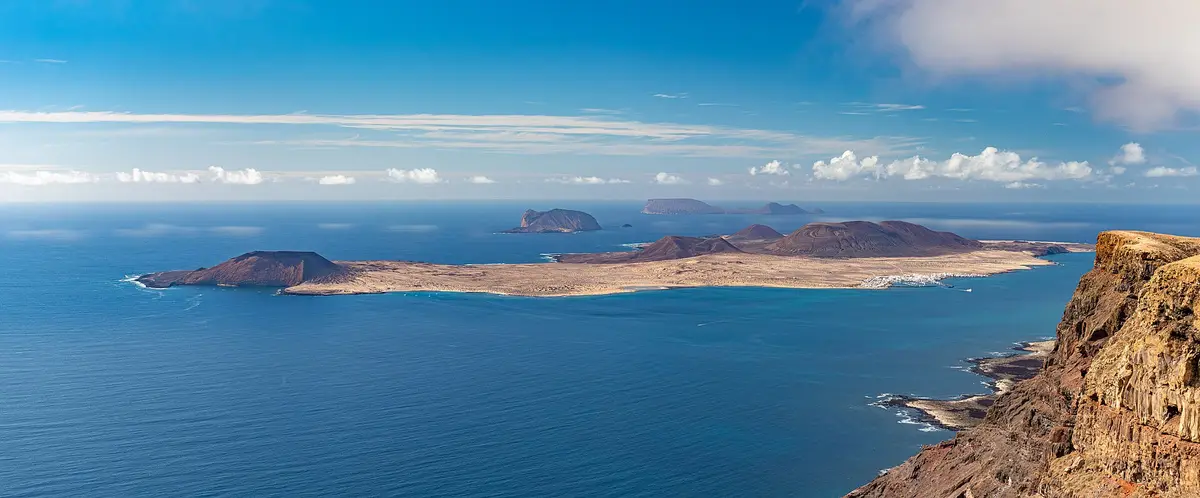
Small islands and surrounding sea define the Chinijo Archipelago, a protected group in the northeastern Canary Islands. La Graciosa is its largest and only inhabited island; the remaining islets give the group its wider geographical identity. Visitors come for an island landscape whose protection extends beyond the land into the water.
The Chinijo Archipelago comprises La Graciosa, Montaña Clara, Alegranza, Roque del Este and Roque del Oeste. Of these, only La Graciosa is inhabited. A visit centred on that island therefore covers part of the archipelago, rather than a separate destination outside it. The other names belong to uninhabited islets, not neighbouring towns or villages.
“Chinijo” is a local colloquial adjective meaning “small”, a reference to the limited dimensions of the island group. Its protected area nevertheless includes more than dry land: the archipelago forms part of a park established in 1986 and also lies within a large marine reserve. The sea between and around the islands is consequently part of the protected setting, rather than simply the space separating them.
For a trip, La Graciosa is the inhabited destination to distinguish from the wider nature area. Visiting the other islets is a separate access question; their inclusion in the archipelago does not establish that visitors can land there.
La Graciosa and the Chinijo Archipelago are not competing island destinations: La Graciosa belongs to Chinijo. The distinction is between an individual island and the wider group that includes it. La Graciosa is both the largest member and the only inhabited island, while Montaña Clara, Alegranza, Roque del Este and Roque del Oeste complete the archipelago.
For someone choosing what to visit from Lanzarote, this makes La Graciosa the specific island destination and Chinijo the broader geographical and protected setting. A plan described simply as a visit to Chinijo needs to specify which island it concerns. It should not imply a landing on each of the uninhabited islets.
The same distinction applies to the marine reserve. Its presence describes the protection of the surrounding waters, not a particular visitor activity or excursion. An island visit, a journey through the surrounding sea and access to an uninhabited islet are different arrangements, even when they all concern the same archipelago.
The name Chinijo comes from a local colloquial adjective meaning “small”. It refers to the reduced dimensions of the archipelago, rather than to a settlement or an individual island. La Graciosa has its own name within the group, as do Montaña Clara, Alegranza, Roque del Este and Roque del Oeste.
This local name sits alongside the archipelago's formal protection. The island group forms part of a park established in 1986 and is also part of a large marine reserve. These are related aspects of the place, but they describe different elements: an archipelago is the group of islands, while marine protection concerns its surrounding sea.
The result is a nature destination whose identity does not rest on a single building, monument or visitor attraction. Its defining features are the relationship between inhabited La Graciosa and the uninhabited islets, and the inclusion of both islands and water within a protected setting in the northeastern Canary Islands.
La Graciosa is the only inhabited island in the Chinijo Archipelago. That is the clearest starting point when separating an island visit from a broader excursion around the group. Montaña Clara, Alegranza, Roque del Este and Roque del Oeste are uninhabited, and their names on a map should not be read as a list of ordinary visitor stops.
Access to an individual islet needs to be confirmed before making plans that depend on landing there. The archipelago's protected status and its position within a marine reserve do not, by themselves, establish which activities are available or permitted. A journey that passes an island is also different from an arrangement that allows time ashore.
When considering a visit, the useful practical detail is therefore the named destination and what the arrangement actually includes. La Graciosa identifies a particular island; Chinijo identifies the wider group. Keeping those names distinct avoids treating an archipelago as though it were a single attraction with a single entrance.


The Chinijo Archipelago includes La Graciosa, Montaña Clara, Alegranza, Roque del Este and Roque del Oeste. La Graciosa is the largest and the only inhabited island. The group lies in the northeastern Canary Islands, and its name comes from a local colloquial adjective meaning “small”.
Yes, La Graciosa is part of the Chinijo Archipelago, rather than a separate island group. It is the archipelago's largest and only inhabited island. The name Chinijo refers to the wider group, including the uninhabited islets of Montaña Clara, Alegranza, Roque del Este and Roque del Oeste.
Yes, the Chinijo Archipelago forms part of a park established in 1986 and is also within a large marine reserve. Its protected setting includes the island group and surrounding waters. That status does not establish visitor access to every islet, so any proposed landing needs separate confirmation.
Chinijo is a local colloquial adjective meaning “small”, used here in reference to the archipelago's reduced dimensions. It names the whole island group, not just La Graciosa. The group also includes Montaña Clara, Alegranza, Roque del Este and Roque del Oeste, which are uninhabited islets.
Keep going
A subterranean salt lake and lava openings form the setting for César Manrique's cultural centre
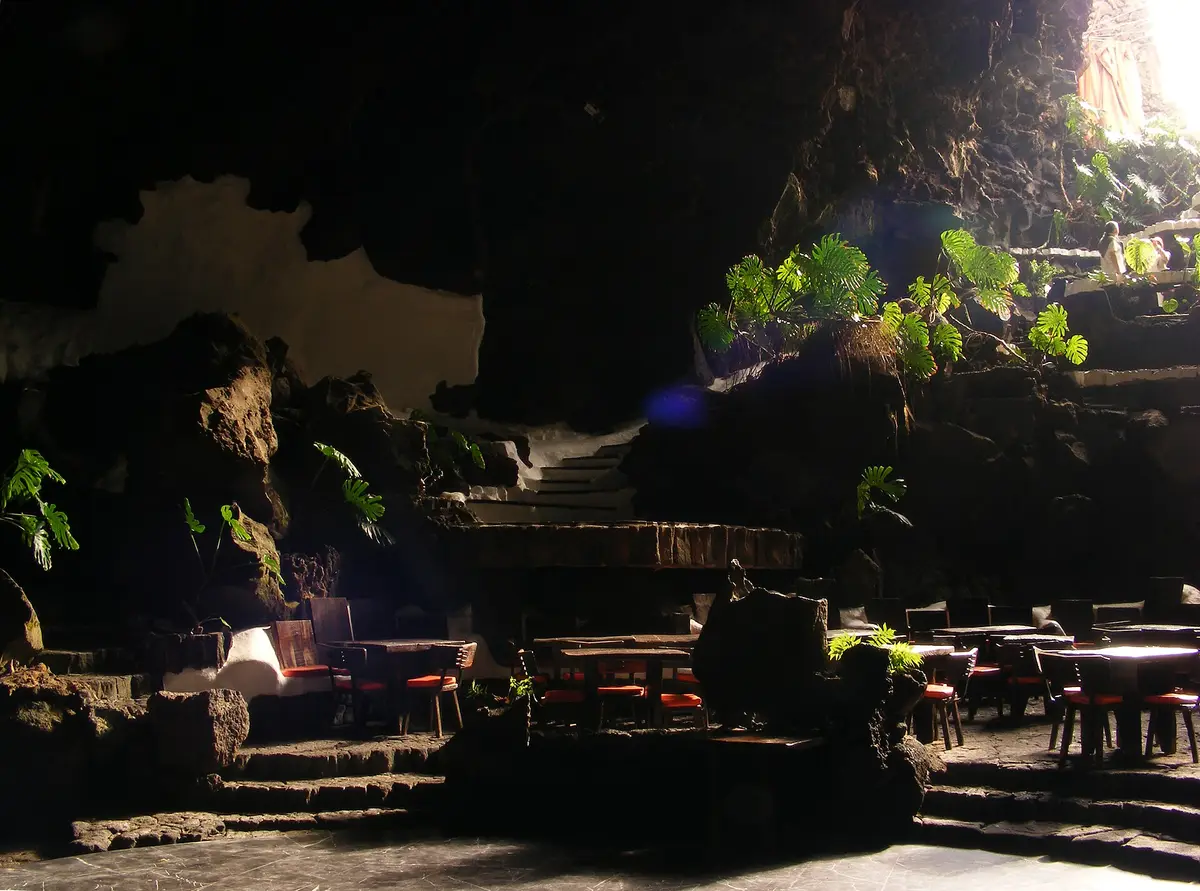
Enter a drained lava tube with illuminated cave walls and a concert hall near its entrance
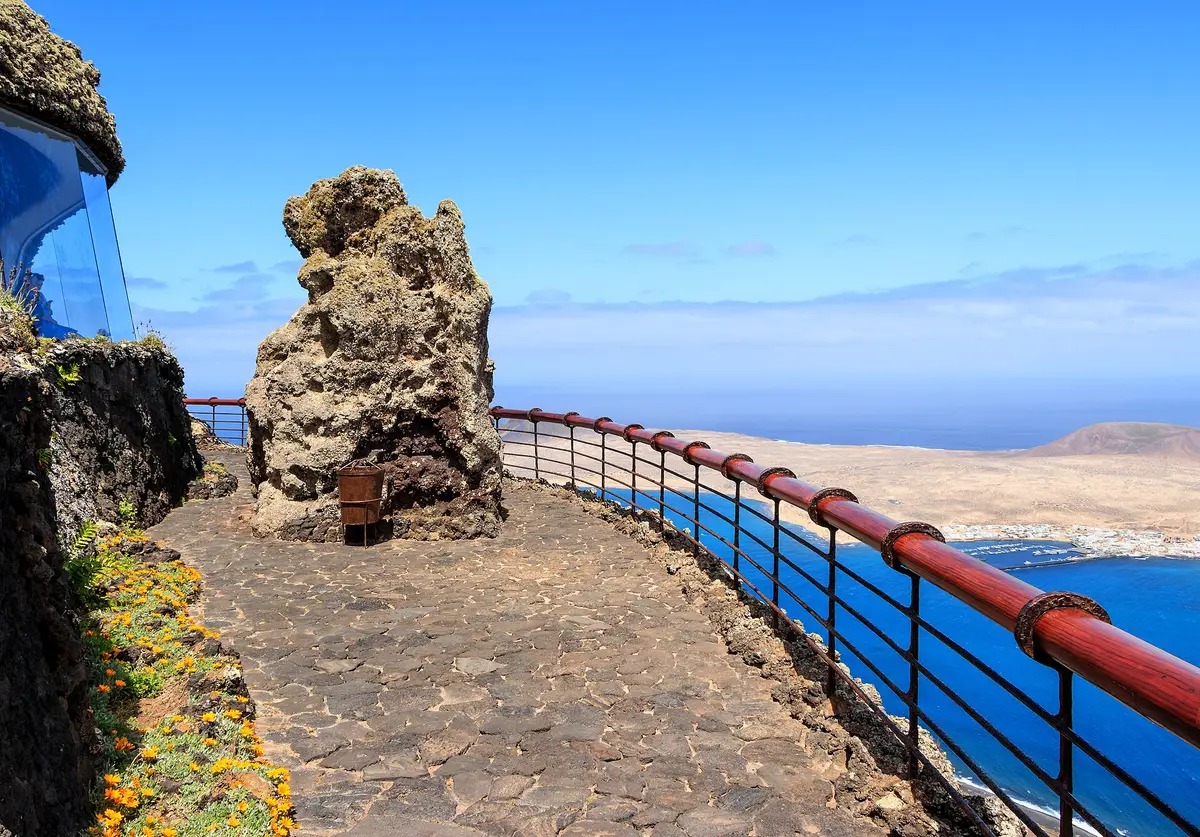
A stone-covered viewpoint with vaulted rooms and broad windows facing La Graciosa