Manrique
Jameos del Agua
A subterranean salt lake and lava openings form the setting for César Manrique's cultural centre
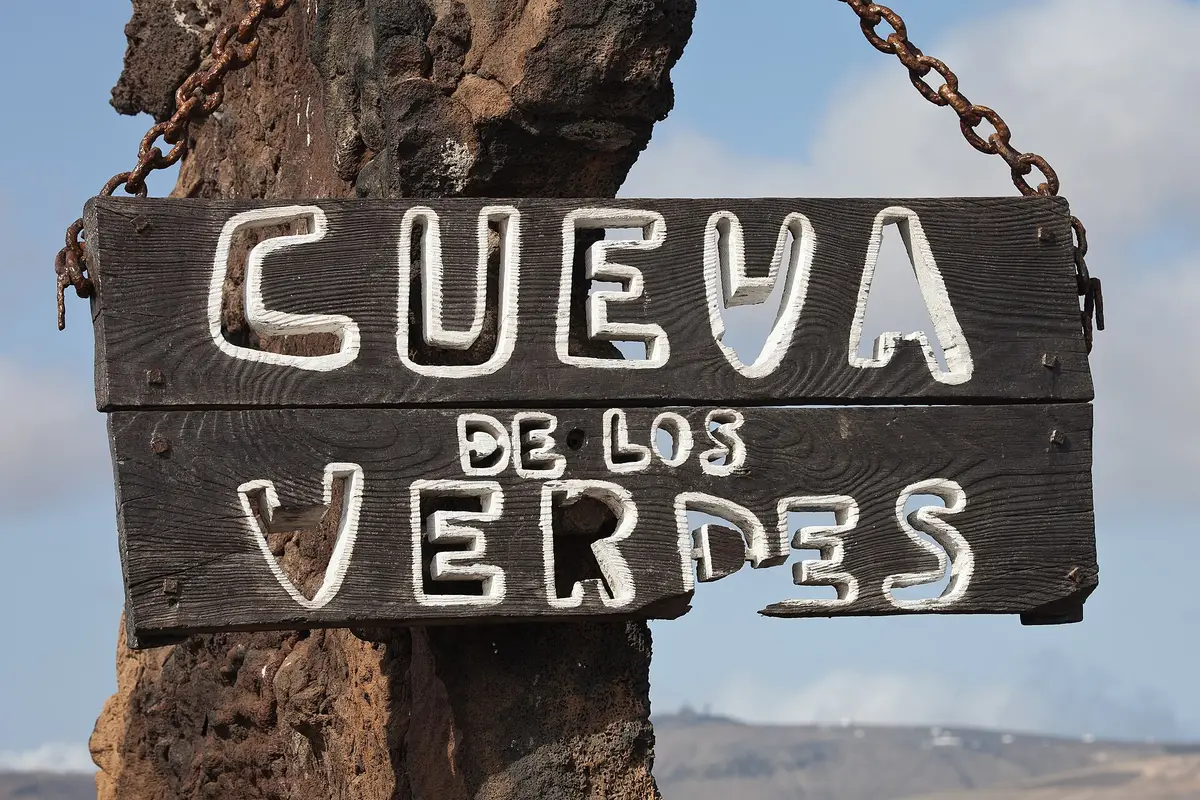
Cueva de los Verdes takes visitors beneath northern Lanzarote into a lava tube formed around 3,000 years ago. Located in the municipality of Haría, the cave has illuminated passages and a concert hall. Its human history is older than its tourism role: island inhabitants once sheltered here from pirates and raiders.
The cave began as a stream of lava from Monte Corona flowing towards the sea. Its upper surface cooled into a solid crust while molten lava continued to move underneath. When that lava drained away, the crust remained as a roof over the empty channel. Cueva de los Verdes is part of that hollow structure, rather than a cave excavated by water through softer rock.
The wider cave system extends for 6 kilometres above sea level and another 1.5 kilometres below the sea. Around 20 roof collapses created openings known locally as jameos, and one of these forms the entrance to Cueva de los Verdes. Those dimensions describe the wider system, not the length of a visitor walk.
The cave lies within a protected natural area. Jameos del Agua occupies another part of the same tube, nearer the coast, but its gardens, salt lake and Manrique-designed cultural spaces make it a different attraction. Here, the developed attraction is within the cave passages themselves.
Two kilometres of the cave system were developed for tourism in the 1960s, with coloured lights illuminating the walls. The visible surfaces are the remains of the lava channel and its cooled roof, so the visit follows a structure created by moving molten rock. The lighting is a later intervention, added when the cave was adapted for visitors rather than a natural property of the stone.
Near the entrance and exit is a concert hall built into the cave. It has about 15 to 20 rows, with 26 seats in each row, and can accommodate up to 500 people. The hall gives part of the underground system a performance use alongside its role as a visitor attraction; its presence does not mean a concert accompanies a cave visit.
Long before the tourism development, inhabitants from across Lanzarote used the cave to shelter from pirates and raiders. That earlier use adds a practical human history to the passages: the enclosed volcanic space served as refuge before lighting and seating were installed.
Before Cueva de los Verdes became a tourist attraction, its underground spaces offered shelter to people from across Lanzarote. In earlier centuries, inhabitants hid here from pirates and raiders. The same volcanic roof that now encloses illuminated visitor passages then provided concealment within the lava landscape. Its history is therefore not limited to geology or the later development of a concert venue.
The change to a visitor attraction came in the 1960s, when two kilometres of the system were developed and coloured lighting was introduced along the cave walls. Seating in the concert hall brought another use to the underground space. These additions sit within a structure that began around 3,000 years ago, when lava flowing from Monte Corona cooled at the surface and drained beneath its hardened crust.
The layers of use remain distinct: a naturally formed tube, a refuge during raids, and a developed attraction with illuminated passages and a performance space. None required the cave itself to be excavated as a conventional underground building.
The closest comparison is Jameos del Agua, which occupies the same volcanic tube nearer the coast. At Cueva de los Verdes, development brought visitors into cave passages, lighting the walls and adding a concert hall near the entrance and exit. The principal structure is the drained lava channel beneath its cooled roof, entered through an opening caused by a collapse.
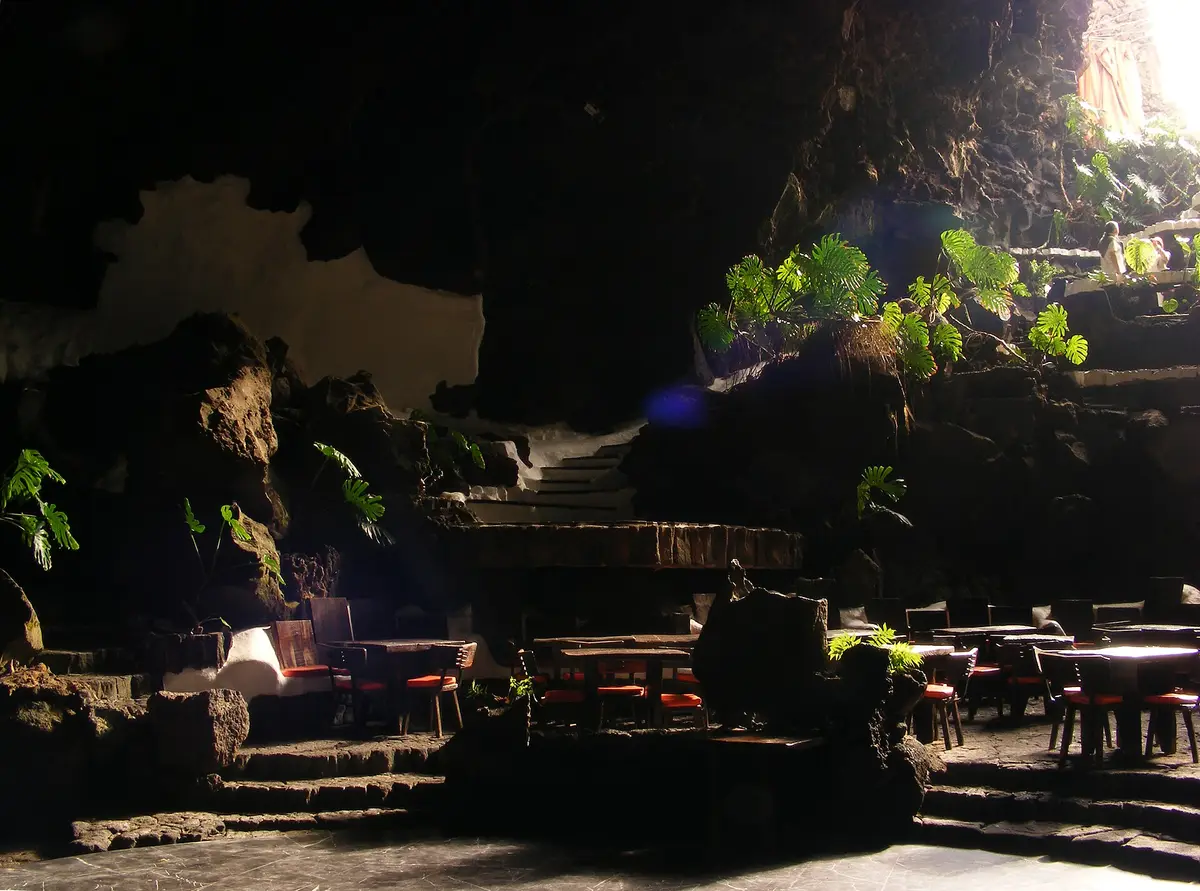
Jameos del Agua uses larger openings in the tube for César Manrique's cultural centre. Its subterranean salt lake, gardens, emerald-green pool, restaurant, museum and auditorium create a more varied arrangement of natural and designed spaces. The lake also supports tiny endemic blind squat lobsters, giving that attraction an ecological focus not shared by the developed passages described here.
Timanfaya National Park offers a different volcanic visit again, with a coach route across eruption-shaped terrain and a demonstration of underground heat. Cueva de los Verdes is the option centred on being inside the volcanic structure, beneath the crust left when a flowing stream of lava emptied.


The wider cave system extends for 6 kilometres above sea level and another 1.5 kilometres beneath the sea. Two kilometres were developed for tourism in the 1960s. These figures describe the cave system and its development, not a guaranteed walking distance for an individual visit, so they should not be used to estimate time underground.
Yes, there is a concert hall inside the cave near its entrance and exit. It accommodates up to 500 people, with about 15 to 20 rows of seating. It forms part of the cave's developed interior, alongside the illuminated passages, but a sightseeing visit should not be assumed to include a performance.
Cueva de los Verdes formed when lava from Monte Corona cooled at the surface while continuing to flow beneath its hardened crust. The molten material later drained away, leaving an empty channel with a solid roof. Roof collapses created openings called jameos, including the opening that now forms the cave's entrance.
Yes, inhabitants from across Lanzarote sheltered in the cave to protect themselves from pirates and raiders in earlier centuries. That use predates the visitor development of the 1960s, when cave passages were illuminated. The underground concert hall represents a later cultural use of the same naturally formed volcanic space.
Keep going
A subterranean salt lake and lava openings form the setting for César Manrique's cultural centre
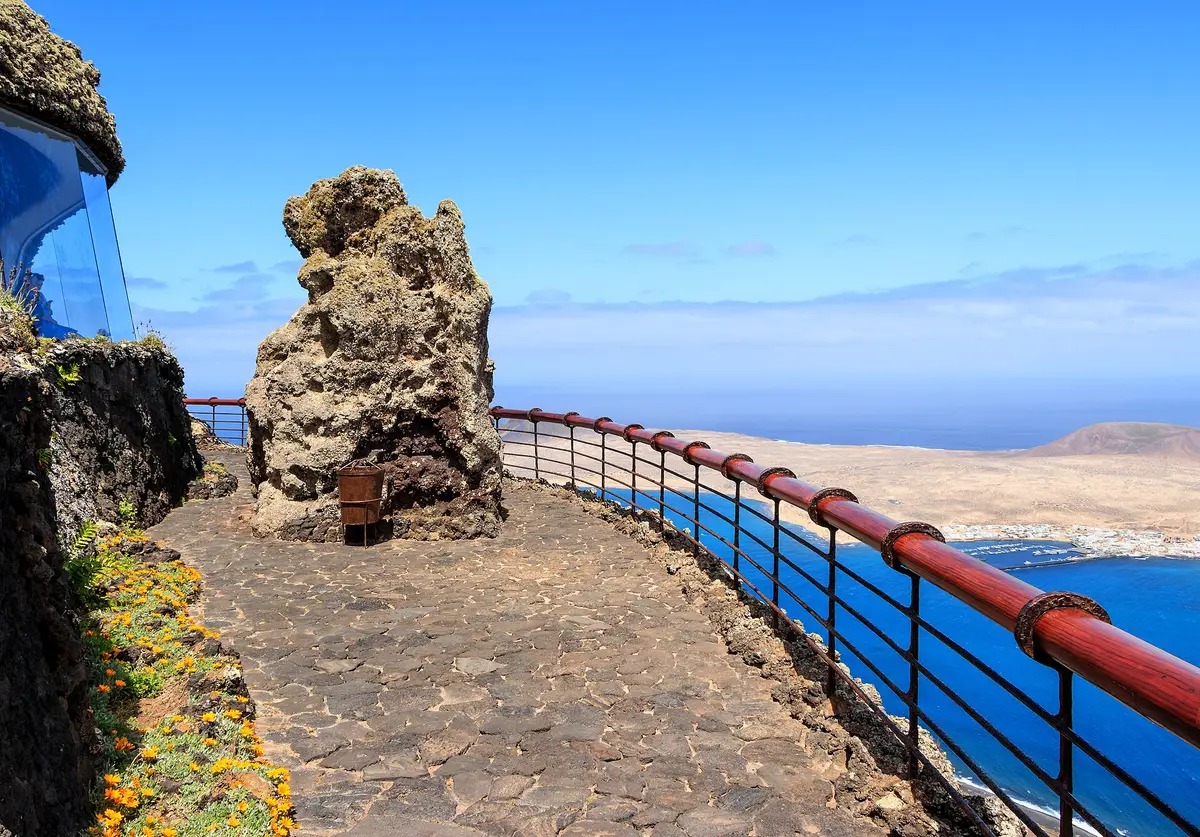
A stone-covered viewpoint with vaulted rooms and broad windows facing La Graciosa
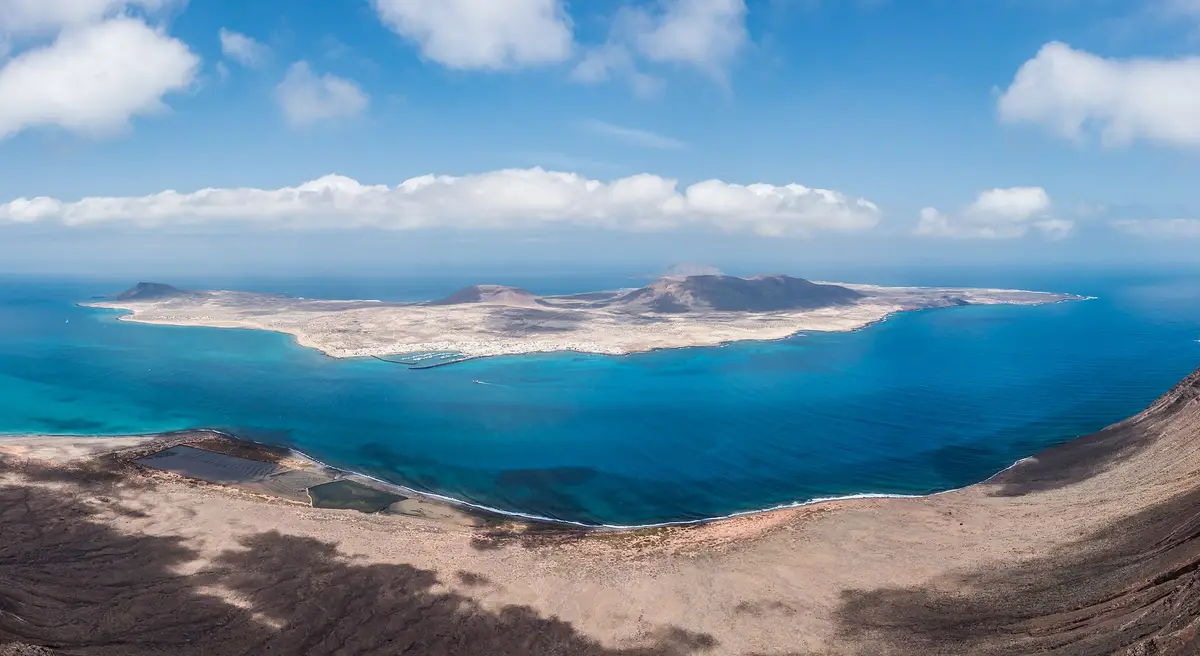
A ferry ride from Órzola leads to sandy streets, volcanic hills and a coastline without paved roads