Landscape
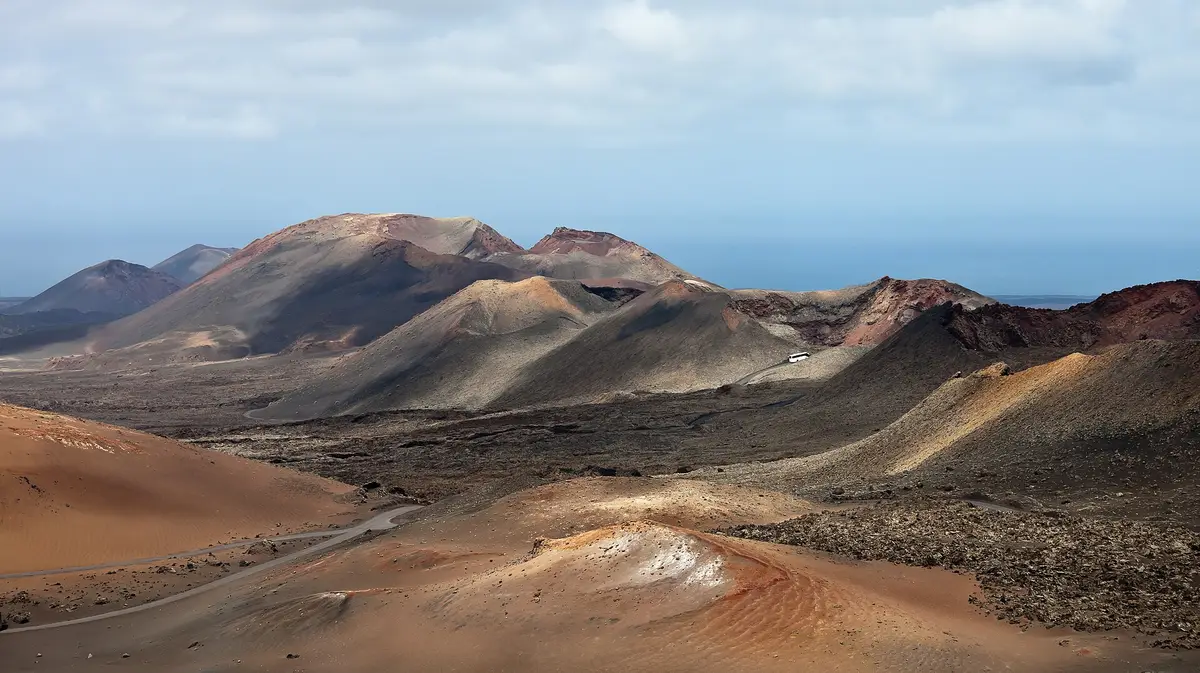
Timanfaya National Park
Tour a landscape formed by historic eruptions, where underground heat still turns water into steam
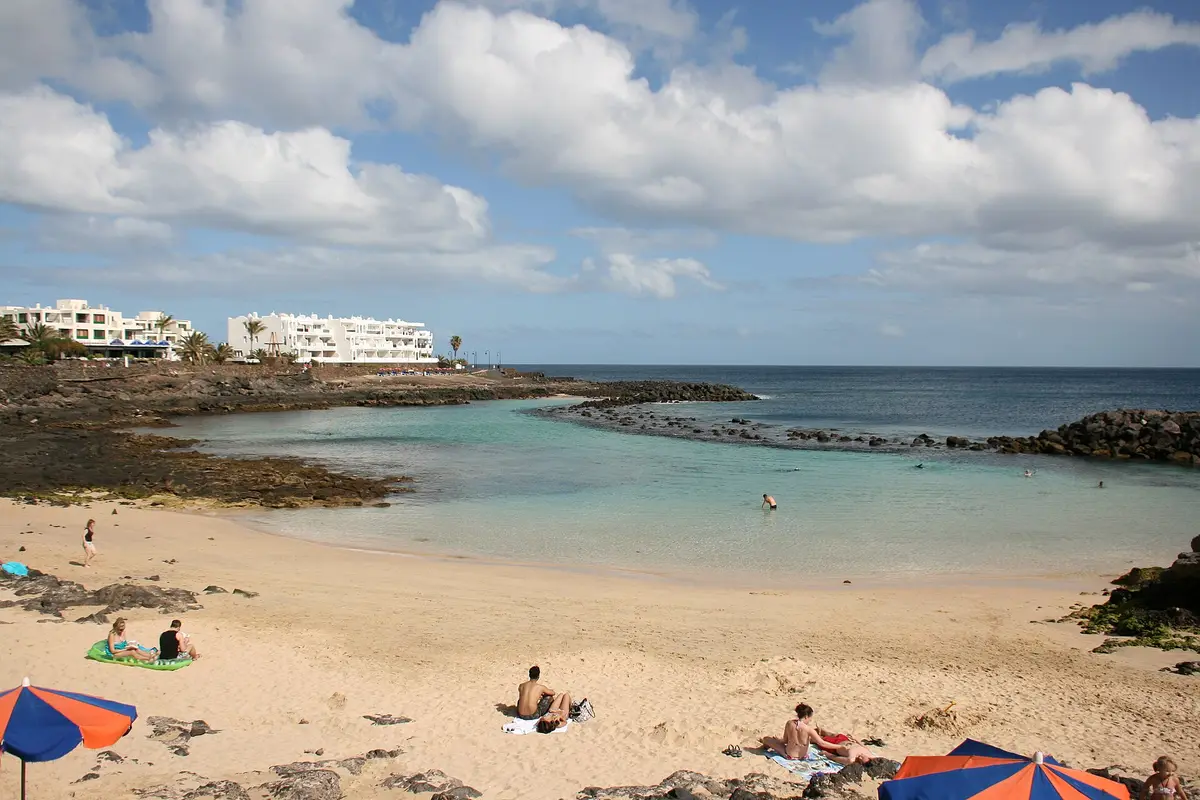
Costa Teguise was built for tourism, with its streets laid out and serviced before construction began. Today, this coastal town in the Municipality of Teguise is a base for a seaside stay on Lanzarote. Playa de las Cucharas provides a beach focus, while the town's origins distinguish it from an older settlement.
Costa Teguise began with infrastructure rather than buildings. Before construction of the resort got under way, its streets had already been planned, built and supplied with services. Tourism was the intended purpose from the outset, not an activity added later to an existing town. That sequence is the unusual detail in its development: the framework for the settlement was ready before the buildings that would occupy it.
What visitors encounter today is a coastal resort within the Municipality of Teguise. Costa Teguise and Teguise are separate places, despite the shared name, so the distinction matters when choosing accommodation or arranging a journey. Playa de las Cucharas is a beach to look at when deciding where in the resort to stay.
Puerto del Carmen and Playa Blanca are the obvious alternatives for a resort-based holiday on Lanzarote. Costa Teguise belongs in that comparison, with its purpose-built origins central to the kind of town it is.
August is Costa Teguise's hottest month, with an average temperature of 24.4 °C. January is the coolest, averaging 18.3 °C. These are monthly averages rather than promised daytime temperatures, so they describe the broad seasonal pattern without telling you exactly what a particular afternoon will feel like. For a holiday centred on the coast, August offers the warmest average conditions; January is the cooler choice.
The average exceeds 20 °C in 7 months of the year. Warm conditions therefore extend beyond the hottest month, which is useful if your dates are flexible and you do not specifically want an August stay. Annual rainfall is 83 mm, a low total, although that figure does not establish which days will be dry.
For time at Playa de las Cucharas, temperature is only part of the picture. A monthly average cannot establish sea conditions or swimming suitability on the day. Beach plans still depend on the conditions you find when you arrive.
The main reason to stay in Costa Teguise is its role as a coastal holiday town. A visit can centre on Playa de las Cucharas, with time elsewhere on Lanzarote arranged around the beach rather than the other way round. The resort is also distinct from Teguise: choosing Costa Teguise means choosing the coast, not simply another name for the same destination.
For days away from the shore, the island's attractions include Fundación César Manrique, Jardín de Cactus and Jameos del Agua. These are separate outings rather than features of the resort itself. Timanfaya National Park offers another change of setting from a beach-based stay. Their inclusion in a holiday depends on your transport arrangements, rather than on Costa Teguise's resort facilities.
When comparing accommodation here with Puerto del Carmen or Playa Blanca, the useful starting point is its actual location within the town. A Costa Teguise address alone does not establish how close a property is to Playa de las Cucharas.
Costa Teguise is both a coastal town and a tourism development. Those descriptions are not interchangeable with the Municipality of Teguise, the wider administrative area to which it belongs. The resort's name can obscure that distinction, particularly when Teguise also appears as a separate destination in an itinerary.
Its origins are unusually clear in practical terms. Streets were not merely sketched out before the resort grew: they were constructed and serviced in advance. The buildings followed an established street framework. That makes the preparation of the site, rather than a surviving historic building or an individual monument, the central detail of its foundation story.
For a visitor, this is background to the everyday experience of staying by the sea. Costa Teguise is primarily somewhere to base a holiday, spend time at the beach and return to after outings around Lanzarote. Its interest as a town lies in that deliberate creation for tourism, rather than in presenting itself as an older settlement.
.JPG)
No, Costa Teguise and Teguise are separate places. Costa Teguise is the coastal resort, and it lies within the Municipality of Teguise. The shared name can cause confusion when planning a stay, so check that an accommodation address or destination refers to the coastal town you intend to visit.
Yes, Costa Teguise was deliberately built to accommodate tourism. Its distinctive development sequence began with the streets: they were planned, constructed and serviced before building work on the resort began. It is therefore a purpose-built holiday town, with tourism part of its original design rather than a later change of use.
Costa Teguise has its highest monthly average temperature in August, at 24.4 °C, and its lowest in January, at 18.3 °C. Averages exceed 20 °C in 7 months of the year, and annual rainfall totals 83 mm. These figures describe the climate, not guaranteed conditions for individual holiday dates.
Playa de las Cucharas is a beach in Costa Teguise and a useful reference point when choosing where to stay. If beach time is the main purpose of your holiday, check the property's actual position in relation to it rather than assuming every address in the resort offers the same access.
Keep going
Tour a landscape formed by historic eruptions, where underground heat still turns water into steam
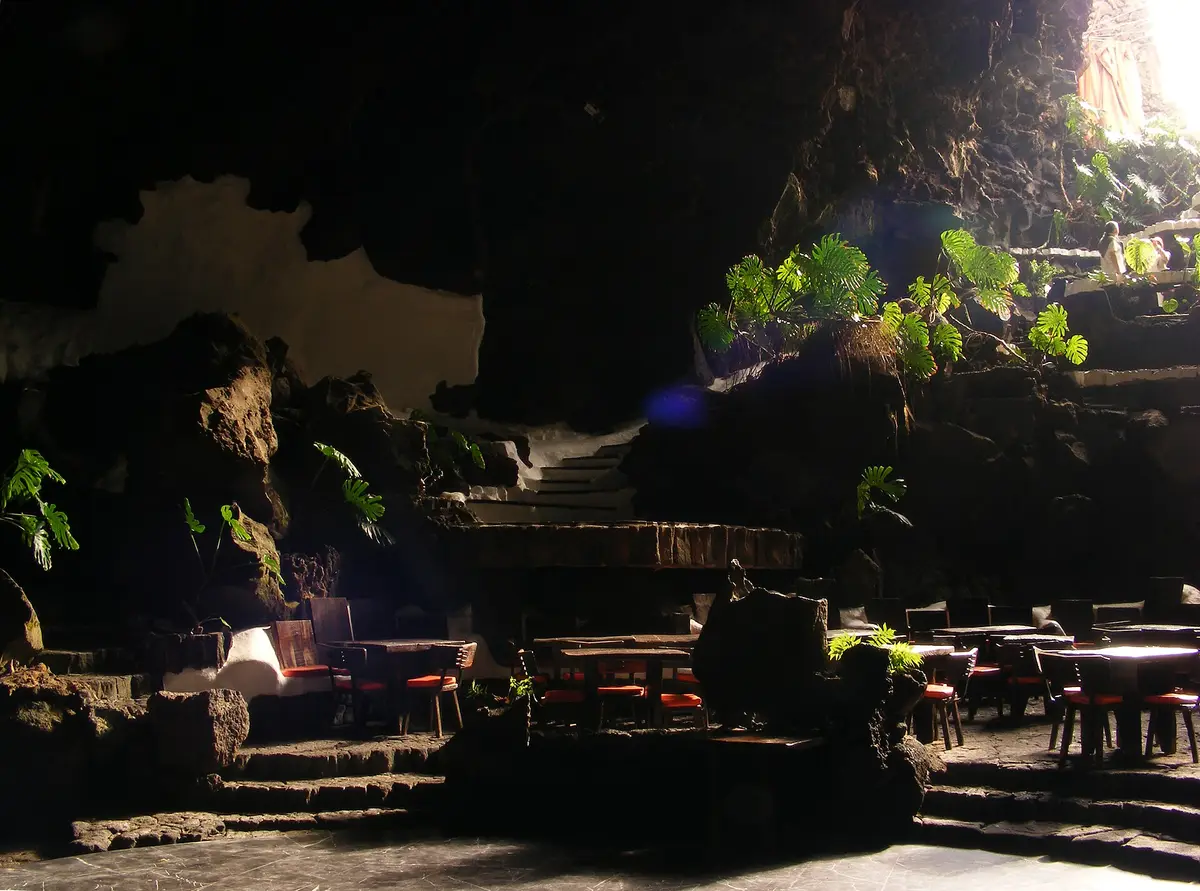
A subterranean salt lake and lava openings form the setting for César Manrique's cultural centre
Enter a drained lava tube with illuminated cave walls and a concert hall near its entrance