Landscape
Timanfaya National Park
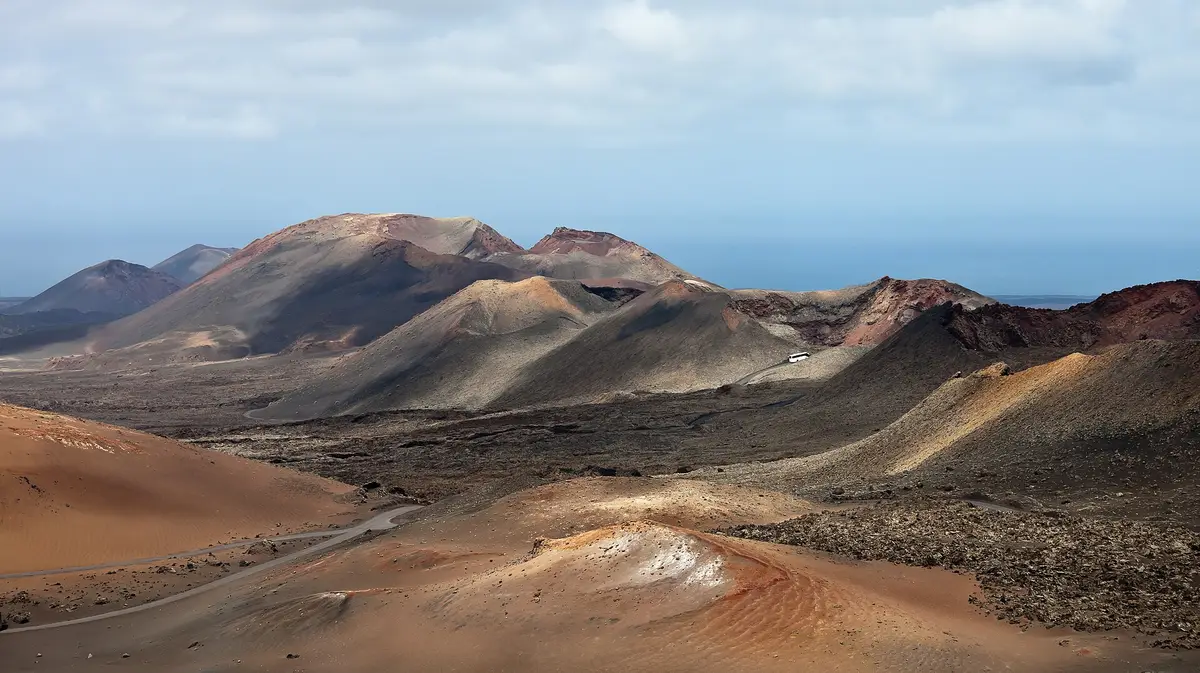
Tour a landscape formed by historic eruptions, where underground heat still turns water into steam
Below the surface off southern Lanzarote, Museo Atlántico is a sculpture museum visited by diving rather than walking through galleries. Artist Jason deCaires Taylor placed groups of human figures on the seabed, creating an underwater collection that changes as marine life colonises it. The attraction combines an art visit with the practical demands of a dive.
Planning a whole day from a base nearby? See things to do in Playa Blanca.
Museo Atlántico was conceived as an underwater sculpture museum and an artificial reef. Jason deCaires Taylor's concrete figures stand, sit and gather across the seabed, with the surrounding water taking the place of gallery walls. Some were modelled on people living in Lanzarote, giving the collection a connection to the island beyond its offshore location.
The installations include a boat carrying human figures, a crowd moving towards an opening in a wall and a circular arrangement of bodies. The boat addresses migration, while other groups examine collective behaviour and people's relationship with the natural world. These are recognisable human scenes rather than abstract objects, although masks, moving water and marine growth change how their details appear during a dive.
The sculptures were made to be colonised by marine organisms. Their surfaces therefore change rather than retain the fixed finish expected in an indoor collection. Looking closely involves noticing both the sculpted faces and clothing and the living growth covering parts of them.
The museum lies in the waters off Las Coloradas on Lanzarote's southern coast, in the municipality of Yaiza. Its location is given as 300 metres from Marina Rubicón. Playa Blanca is the nearby town to use when considering where to stay or arrange the surrounding day, but the museum itself is offshore, not a building on the waterfront.
A visit centres on scuba diving, so choosing suitable access matters more than arriving at a ticket desk. Before booking, establish what diving experience the organiser requires, what instruction is available and whether equipment and transport to the site are included. Anyone without a diving qualification should ask specifically about beginner arrangements rather than assume that a standard museum dive is suitable.
Sea conditions and underwater visibility affect the experience. Following the dive guide and keeping clear of the sculptures protects both their surfaces and the organisms growing on them. For an art visit without entering the water, Castillo de San José provides a land-based alternative; Museo Atlántico makes the underwater setting part of the encounter.
Museo Atlántico is the first underwater museum in the Atlantic Ocean and Europe, and it sits among the earliest underwater museums worldwide. Its distinction is not simply that artworks have been placed beside the sea: the collection is submerged, and the visitor enters the same water that surrounds and gradually alters it.
That changes the mechanics of looking. There is no dry gallery floor from which to study the figures, and the route through the collection is governed by a dive rather than an independent walk. A mask narrows the view, suspended particles can soften outlines, and the distance between a diver and a sculpture affects how clearly faces and gestures can be seen. The groups reward attention to their arrangement as well as their individual figures.
The underwater location also means the museum is not interchangeable with a conventional cultural stop. It needs planning around diving suitability and sea conditions. For visitors already comfortable underwater, its appeal is the chance to encounter figurative sculpture within a living marine environment rather than behind a barrier.
The sculptures have a dual role: they form an art collection and provide hard surfaces on which marine life can establish itself. Their purpose-built concrete gives the seabed groups a substantial physical presence, while the figures' recognisable bodies, clothes and expressions keep the human subject visible beneath the accumulating growth.
This is not a collection intended to remain visually unchanged. Colonisation softens details, adds texture and makes the surrounding marine environment part of what a diver sees. A face may be read first as a portrait and then as a surface supporting living organisms. The distinction between sculpture and habitat becomes less clear as the works weather underwater.
For a visitor, that makes careful buoyancy and a non-contact approach important. Touching a figure is not simply touching a museum object; it can also disturb the life attached to it. The most useful preparation is therefore practical as well as cultural: being comfortable with the diving arrangements leaves more attention available for the scenes, their placement and the changes taking place across their surfaces.
Museo Atlántico is underwater off Las Coloradas on the southern coast of Lanzarote, in Yaiza. It lies 300 metres from Marina Rubicón, near Playa Blanca. This is an offshore attraction rather than a waterfront museum building, so confirm the meeting and departure arrangements with your dive organiser before travelling there.
Beginners should check the available introductory diving arrangements before booking. The sculptures are underwater, and a museum visit does not remove the need for appropriate instruction, equipment and supervision. Tell the organiser about your experience and ask what preparation is required. Do not assume that every advertised dive accepts visitors without qualifications.
Jason deCaires Taylor created Museo Atlántico's underwater sculptures. The collection uses human figures and grouped scenes to explore subjects including migration, collective behaviour and the environment. Its concrete works also function as an artificial reef, with marine organisms gradually colonising their surfaces and changing the appearance of the collection.
The submerged collection is not a shore-viewing attraction, so a walk along the waterfront is not a substitute for an underwater visit. If you are considering access other than scuba diving, ask an organiser exactly what can be seen and how. Castillo de San José is an alternative for an art visit that stays on land.
Keep going
Tour a landscape formed by historic eruptions, where underground heat still turns water into steam
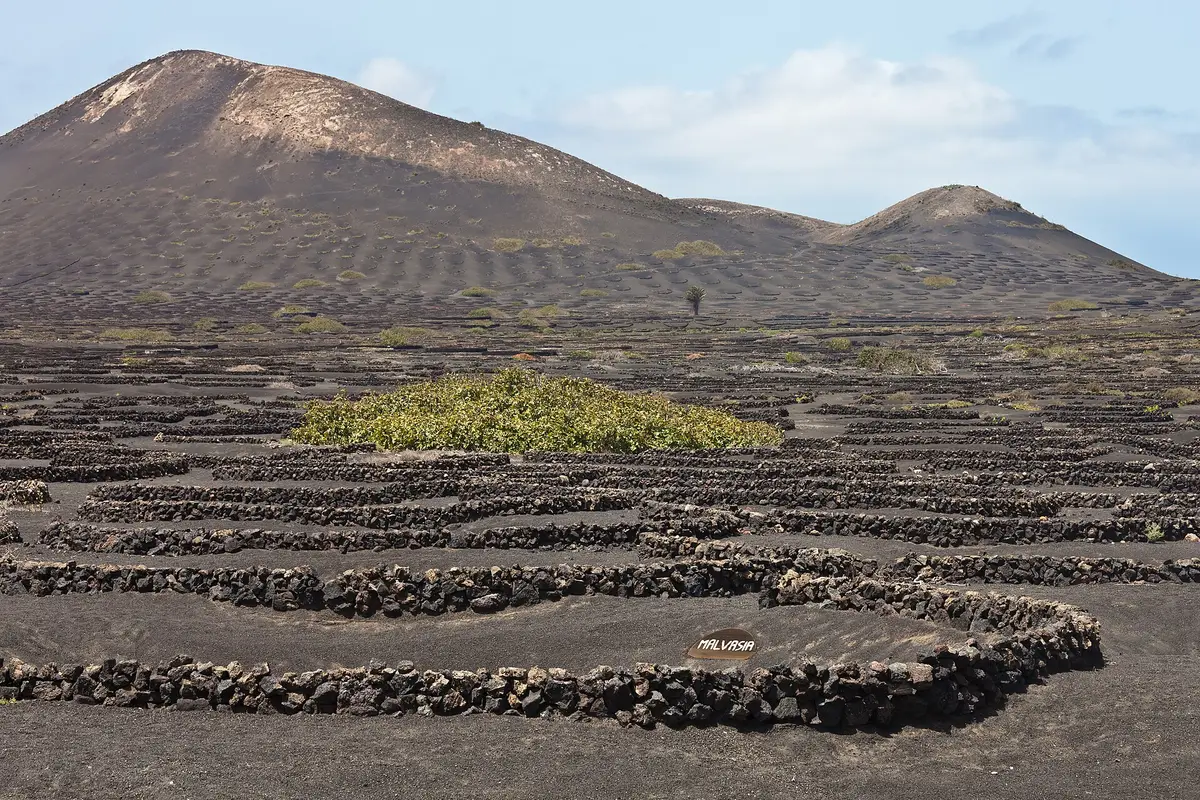
Vines grow in volcanic gravel, sheltered by conical hollows and low dry-stone walls
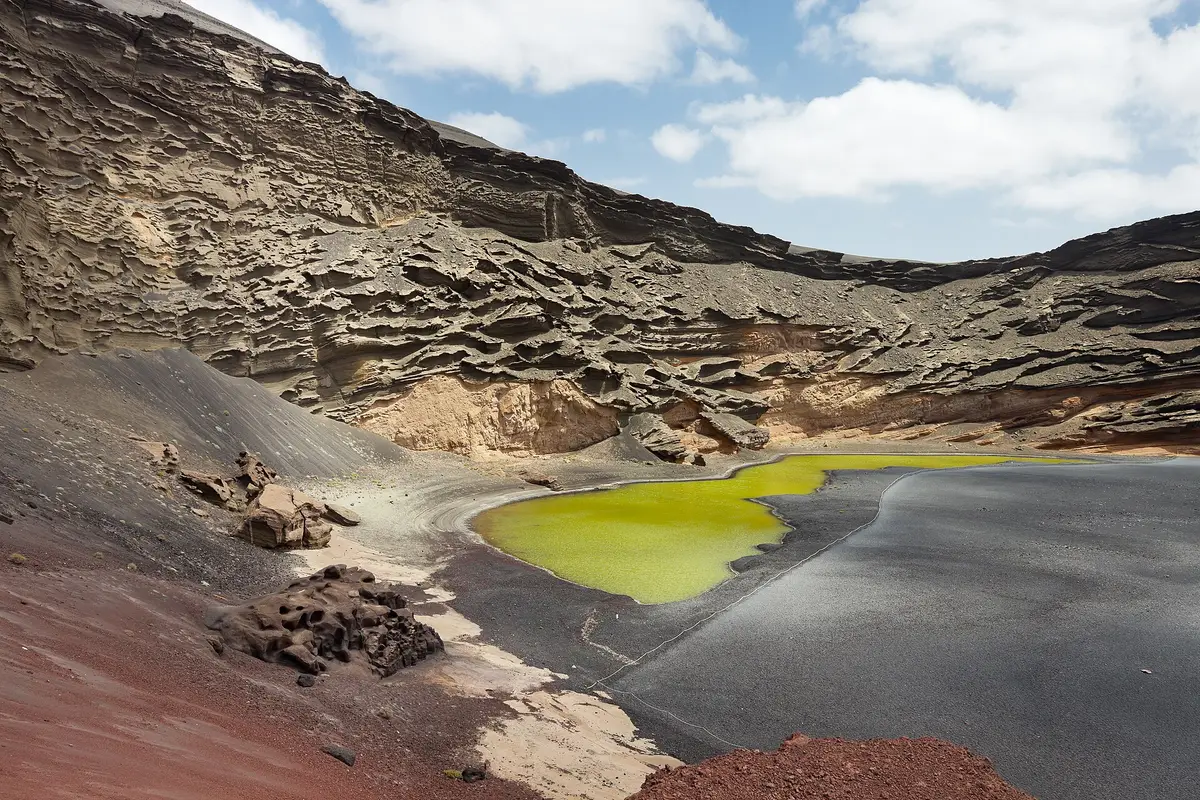
A green coastal lagoon between a volcanic crater and a black shore, seen from a footpath viewpoint