With children
Rancho Texas Lanzarote Park
A cowboy-themed family park combining animal experiences, an interactive environmental cave, heated pools and water slides
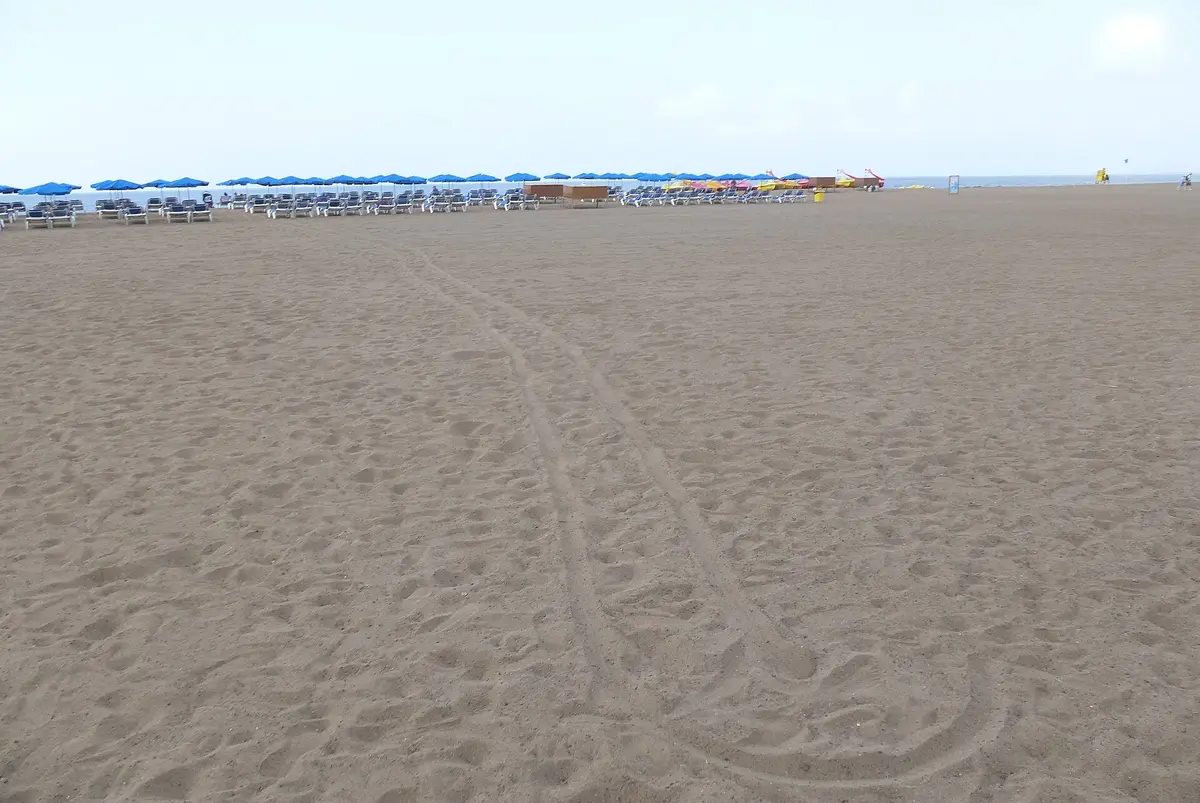
Playa Grande puts you on the coast of Puerto del Carmen, Lanzarote's main tourist town, within the municipality of Tías. Its appeal is the combination of beach and resort: time by the water can sit alongside lunch, shopping or a walk along the seafront, rather than requiring a separate outing.
Planning a whole day from a base nearby? See things to do in Puerto del Carmen.
The setting around Playa Grande is a developed resort coast, with tourism shaping the streets behind the shore. Puerto del Carmen's main seafront avenue, Avenida de las Playas, extends for some 7 km, with beaches on the coastal side and restaurants, bars and shops opposite. That length describes the avenue, not Playa Grande itself. Apartments, villas and hotels spread inland from the waterfront, so the beach belongs to a substantial holiday town rather than an isolated stretch of coast.
A visit here can move between the shore and the town without making lunch or browsing the shops a separate excursion. The seafront businesses cater largely to visitors, and the shopping is mainly tourist-oriented. Restaurants and bars are part of the everyday waterfront scene, not occasional stops along an otherwise undeveloped shore. For someone choosing a beach around the practicalities of a resort stay, this is Playa Grande's clearest distinction: the surrounding town supplies much of what happens before and after time on the beach.
Puerto del Carmen's waterfront has a history beyond beach tourism. The settlement was known as La Tiñosa by at least the 16th century, and Leonardo Torriani referred to its natural port in 1591. Anchorage and the barrel trade helped establish the port's importance. In 1904, the town had 194 inhabitants, mainly occupied in fishing; in 1957, the fishing village was renamed Puerto del Carmen in honour of Nuestra Señora del Carmen.
The opening of Hotel los Fariones in 1967 marked the beginning of the tourism growth described in the town's history. Holiday accommodation subsequently spread along the coast and inland, producing the resort setting around Playa Grande today.
The old town gives a beach visit a different waterfront focus. Its harbour and docks remain visible, while restaurants with outdoor terraces overlook the marina and the sea. Compared with the shop-lined seafront avenue, the harbour area centres on boats, dockside views and meals above the water. It makes a natural addition to a stay based around the beach.
Restaurants, bars and tourist shops line Puerto del Carmen's newer seafront district. Around a Playa Grande beach day, this means eating and shopping are part of the resort setting rather than activities that depend on travelling to another town. Avenida de las Playas is the main thread through that coastal development, with businesses facing the beach side of the avenue.
The distinction between the newer resort frontage and the old town is useful when choosing where to spend time away from the shore. The newer district combines restaurants with bars and shops selling predominantly visitor-oriented goods. In the old town, outdoor restaurant terraces overlook the marina, with views extending across the sea towards volcanic peaks. The setting changes from a commercial beachfront to a working-port backdrop, although both areas cater to holidaymakers.
A beach-focused stay therefore need not revolve entirely around the sand and water. The town offers places to pause for a meal, browse between beach sessions or spend an evening by the harbour.
Scuba diving is an established part of Puerto del Carmen's visitor scene, supported by numerous dive centres. It offers a different way to spend time on the coast during a beach-based holiday, but the town's diving reputation should not be treated as a description of conditions directly off Playa Grande.
The diving area identified in the town is Playa Chica, in the old town. It has over 10 dive sites, with dives available from shore and boat. That makes diving a separate planned activity rather than simply an extension of swimming from whichever beach is closest to your accommodation.
Across Puerto del Carmen's diving waters, reported temperatures range from 19 °C in winter to 23 °C in summer, with visibility averaging over 25 metres to 30 metres. These figures describe the wider diving setting, not a guarantee for a particular outing. A local dive centre can explain the available sites and the conditions for the day, as well as which activities suit your experience.
.JPG)
.JPG)
Playa Grande is in Puerto del Carmen, on Lanzarote, within the municipality of Tías. For planning a beach stay, Puerto del Carmen is the useful town name to recognise: it is the coastal resort with the seafront avenue, holiday accommodation, restaurants and shops, while Tías is the municipality.
Yes, Playa Grande sits within Puerto del Carmen's restaurant-lined resort setting. The main seafront avenue has restaurants, bars and shops opposite the beaches, making it straightforward to combine shore time with a meal. For a different setting, the old town has restaurant terraces overlooking the marina and the sea.
Puerto del Carmen's seafront shops and old-town harbour provide alternatives to spending the whole day on the beach. The newer waterfront is geared towards restaurants, bars and tourist shopping. Around the old town, the focus shifts to the docks, marina views and outdoor terraces where you can stop for a meal.
Puerto del Carmen has numerous dive centres, with shore and boat diving available at Playa Chica in the old town. That is the named diving base rather than Playa Grande itself. Diving can be arranged as a separate activity during a beach stay, with the site and conditions discussed with a local operator.
Keep going
A cowboy-themed family park combining animal experiences, an interactive environmental cave, heated pools and water slides
An old-town beach in Puerto del Carmen with over 10 dive sites accessible from shore and boat