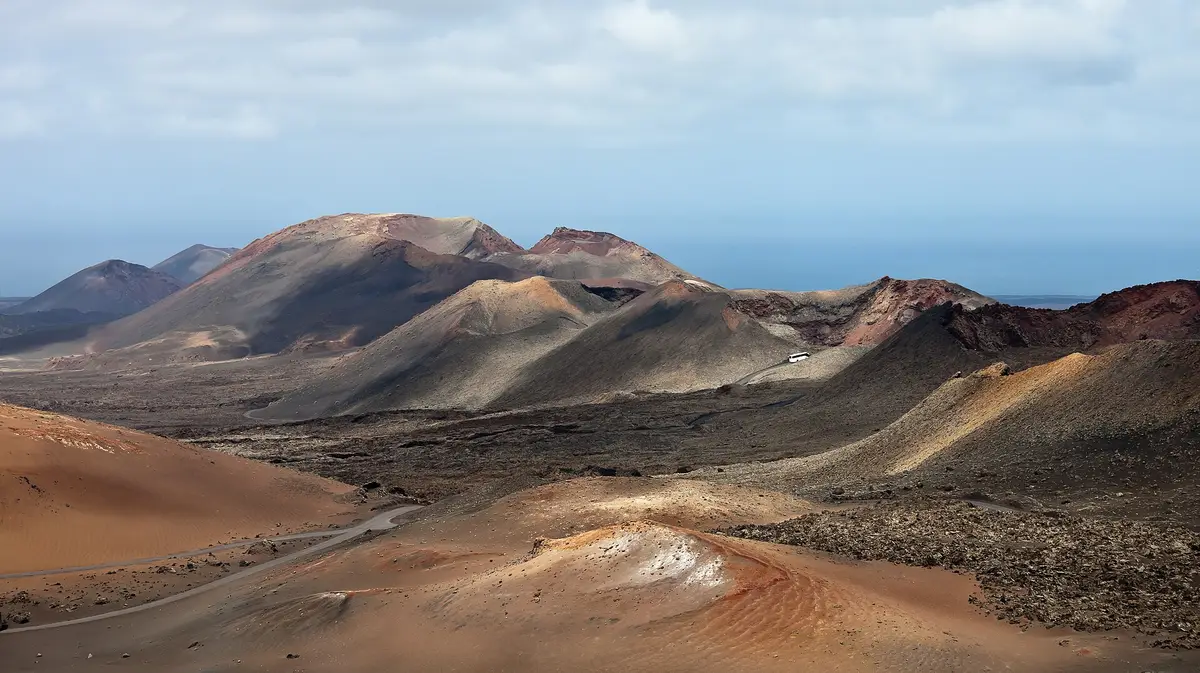
Landscape
Timanfaya National Park
Tour a landscape formed by historic eruptions, where underground heat still turns water into steam
February's 18.5°C average daytime high is barely above January's, despite sunshine rising to 6.1 hours daily. The sea cools to 18.1°C, a temperature it shares with March. With 2 days with rain on average, this is a month for sightseeing and flexible beach stops, not a dependable hot-weather break.
The shift from January to February is more noticeable in the sunshine figures than in daytime temperature. Daily sunshine rises from 5.6 to 6.1 hours, while the average high moves from 18.4°C to 18.5°C. March continues upwards, reaching 6.8 hours of sunshine and a 19.1°C high. February nights average 15.5°C, slightly below January's 15.7°C and March's 15.9°C, so evening clothing still needs thought. Days with rain average 2, compared with 3 in January and 2 in March. At sea, February's 18.1°C is cooler than January's 18.8°C and unchanged in March. These figures favour a trip with varied daytime plans; they do not support treating February as a substantial step towards hot afternoons or warmer swimming water compared with January.
February works best when swimming is optional and the itinerary has interests away from the beach. Jameos del Agua, Cueva de los Verdes and Jardín de Cactus are possible anchors for a sightseeing trip, with time set aside for Haría or Teguise rather than filling every day with attraction visits. Playa de las Cucharas or Playa Blanca can feature without a promise of warm water. The modest daytime high makes this a poor match for travellers whose main aim is prolonged sunbathing in heat. Layers are a practical response to the gap between afternoon and night averages. If your choice is between February and March, March offers more sunshine and higher air temperatures, but not a higher average sea temperature.
| Month | Day | Night | Sea | Rain days | Sunshine |
|---|---|---|---|---|---|
| January | 18.4 C | 15.7 C | 18.8 C | 3 | 5.6 h |
| February | 18.5 C | 15.5 C | 18.1 C | 2 | 6.1 h |
| March | 19.1 C | 15.9 C | 18.1 C | 2 | 6.8 h |
February is only marginally warmer by day, while nights and the sea are cooler. Its average daytime high is 18.5°C against January's 18.4°C, but nights average 15.5°C rather than 15.7°C. Daily sunshine increases to 6.1 hours from 5.6, so the clearer improvement is in average sunshine, not warmth across the whole day.
Neither month has an advantage in average sea temperature: February and March both record 18.1°C. March has a higher daytime high, at 19.1°C compared with 18.5°C, and more daily sunshine. That may make time out of the water more appealing, but it does not turn March into a warmer-water swimming month.
Better for walking
Tour a landscape formed by historic eruptions, where underground heat still turns water into steam
A subterranean salt lake and lava openings form the setting for César Manrique's cultural centre
Enter a drained lava tube with illuminated cave walls and a concert hall near its entrance