Landscape
Timanfaya National Park
Tour a landscape formed by historic eruptions, where underground heat still turns water into steam
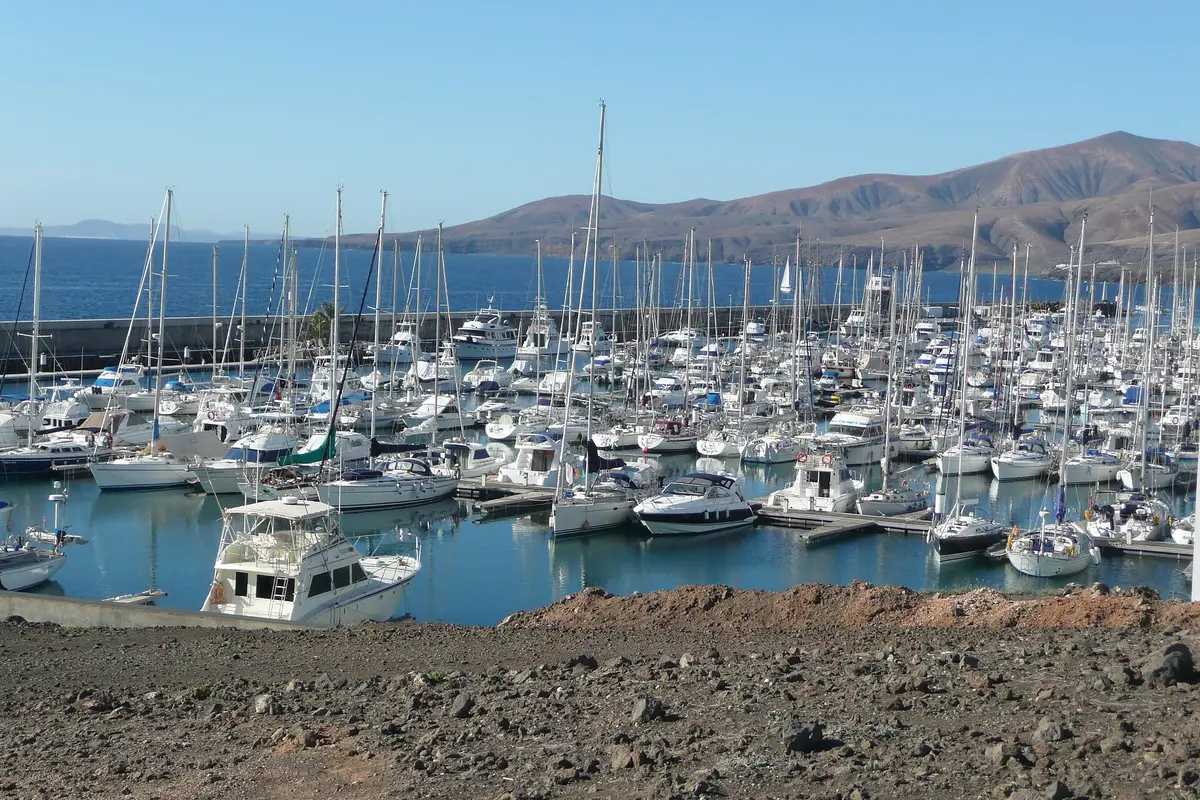
Yachts, waterfront restaurants and boutiques form the centre of Puerto Calero, a purpose-built marina settlement in the municipality of Yaiza. Its harbour grew from a development promoted by José Calero into an established sailing base with dedicated space for megayachts. Visitors come for the boats, the promenade and a meal beside the marina.
The waterfront promenade brings together Puerto Calero's main attractions for visitors arriving without a boat: restaurants, boutiques and the marina itself. The berths accommodate sailing yachts as well as much larger vessels, with a dedicated megayacht area added during the harbour's later expansion. These differences in scale are a distinguishing feature of the waterfront, rather than a backdrop of uniformly sized pleasure boats.
Behind the leisure-facing side is a working marina with a boatyard and services supporting visiting sailors. Puerto Calero is also the departure port for the RORC transatlantic regatta, connecting this small settlement with long-distance ocean sailing. Its nautical role extends beyond providing a setting for restaurants and shops.
The harbour occupies a naturally protected coastal position where ravines formerly reached the sea, on a slope formed by lava flows. That volcanic setting and the sheltered, sunny microclimate help explain its development as a sailing base. A shore-based visit centres on the promenade, looking across the berths and stopping at the waterfront businesses.
Puerto Calero began as a planned development promoted by businessman José Calero in 1983. The proposal combined a marina, commercial premises, housing and a golf course. The golf course belonged to that original proposal; the harbour and its associated commercial and residential areas became the defining elements of the settlement.
The initial marina opened in 1985 with 198 berths. Expansion was proposed in 1992, and capacity reached 400 berths in 1996. A further major project in 2004 created space for 40 megayachts. Those stages explain why large yachts are central to Puerto Calero's identity rather than occasional visitors to a small harbour.
Some scattered homes existed in the area before the development, occupied mainly by residents from elsewhere in Europe. However, the present settlement took shape around the marina rather than growing from an old village centre. Housing, shops and boating facilities were conceived together. For a visitor, that history is most apparent in the harbour's central role: the promenade's dining and shopping offer is part of the marina settlement, not separate from it.
Puerto Calero recorded 420 residents in 2020, a small population for a settlement with such substantial marina facilities. Its importance comes from the harbour's role in sailing rather than the size of the town. Alongside the residential area, the boatyard, berths, waterfront businesses and specialist yacht services give it functions that extend well beyond those of a small coastal neighbourhood.
The contrast is particularly clear in the provision for megayachts. Space for these vessels was a deliberate addition to the harbour, supported by services for their owners and crews. The marina's development has therefore shaped both what visitors see on the water and the businesses gathered beside it.
For someone considering Puerto Calero alongside Puerto del Carmen, the reason to choose it is specific: this is a marina-focused outing. The principal interest is the relationship between the boats and the shore, with restaurants and boutiques along the promenade. It suits a visit built around looking at yachts and eating by the harbour, rather than a programme of monuments or historic streets.
Under the planned streets and harbour facilities, Puerto Calero occupies a lava-flow slope. The settlement stands where ravines once opened onto the coast, giving its location a geological history quite separate from the marina's recent construction. The harbour development brought a commercial and residential centre to a stretch of land that had previously held scattered homes.
Natural protection is an important characteristic of the marina's position. Together with its sunny microclimate, it contributes to the conditions that made the site suitable for a sailing base. The boatyard and yacht-support services are the built counterpart to that sheltered setting: Puerto Calero was developed to receive and support boats, not simply to provide waterfront housing.
These elements remain closely connected during a visit. The promenade belongs to a working harbour, the shops and restaurants serve a settlement organised around sailing, and the large-yacht berths reflect successive investment in that role. The most concrete impression is of a purpose-built coastal town whose centre of activity lies on the water.
.jpg)
Puerto Calero is a coastal marina settlement in the municipality of Yaiza on Lanzarote. It occupies a naturally protected position on a lava-flow slope where ravines formerly met the sea. The settlement is small, with 420 residents recorded in 2020, but its harbour includes dedicated facilities for large yachts.
The main activities are walking along the marina promenade, looking at the yachts, eating at waterfront restaurants and browsing boutiques. The harbour includes sailing-yacht berths and a dedicated megayacht area, so the boats are a substantial part of the interest. A visit is centred on the waterfront rather than sightseeing through an old town.
Puerto Calero is a planned marina settlement, not an old fishing village. José Calero promoted the development in 1983, and the initial harbour opened in 1985 with 198 berths. Although scattered homes already stood in the area, the present commercial and residential centre developed around the marina and its subsequent expansions.
Yes, the waterfront promenade, restaurants and boutiques provide reasons to visit without using the marina's boating facilities. The yachts themselves are the main visual interest, particularly the contrast between sailing boats and larger vessels. It is best understood as a harbour-side outing for a walk, shopping or a meal, rather than a historic-town visit.
Keep going
Tour a landscape formed by historic eruptions, where underground heat still turns water into steam
A subterranean salt lake and lava openings form the setting for César Manrique's cultural centre
Enter a drained lava tube with illuminated cave walls and a concert hall near its entrance